
UV inkjet printers have become "star equipment" in the printing industry in recent years, showcasing their prowess in multiple fields thanks to their high efficiency and flexibility. From flexible roll materials to irregularly shaped curved surfaces, from single-piece customization to mass production, how exactly does this intelligent device, which integrates precision mechanics and optical engineering, achieve the industrial miracle of "what you print is what you get"? What are the special features of its working principle and practical applications? Let's unveil its technological core and application value together.
1. How does it work?
(1) Inkjet technology: Precise "drawing"
UV inkjet printers precisely spray liquid ink onto material surfaces using a printhead. The printhead uses piezoelectric crystals or heating elements to precisely adjust the ink spray volume and speed, much like controlling water droplets, and can even spray ink droplets finer than a human hair.
(2) UV ink: dries instantly upon exposure to light.
This ink is composed of pigments, resins, and a "photoinitiator." When the ink falls onto a material, the device's built-in ultraviolet lamp instantly irradiates it, causing the ink to harden and solidify within one second, directly forming a scratch-resistant coating, completely eliminating the drying time required for traditional printing.
(3) Printing quality: Fast and clear.
UV inkjet printers can output at high speed (printing hundreds of square meters per hour) while ensuring clear details, accurately rendering even the finest lines of 0.1 millimeters, making them particularly suitable for large-sized advertisements or complex patterns.
2. What can it do?
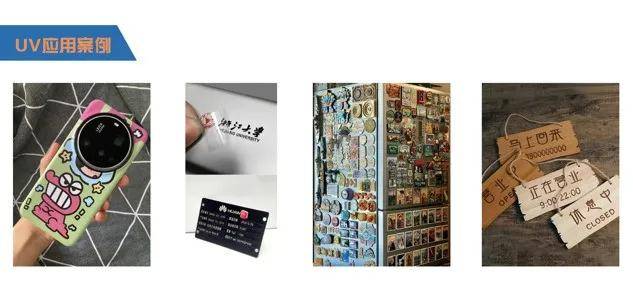
(1) Advertising industry: Rapid rollout
Banners, posters, lightbox advertisements... UV printers can print directly on various materials, producing vibrant colors that are also waterproof and won't fade even when exposed to outdoor wind and sun.
(2) Packaging Industry: Personalized Customization
Cardboard boxes, plastic bottles, and metal cans can all be printed directly, making small-batch production or personalized packaging a breeze, eliminating the need for pre-made plates.
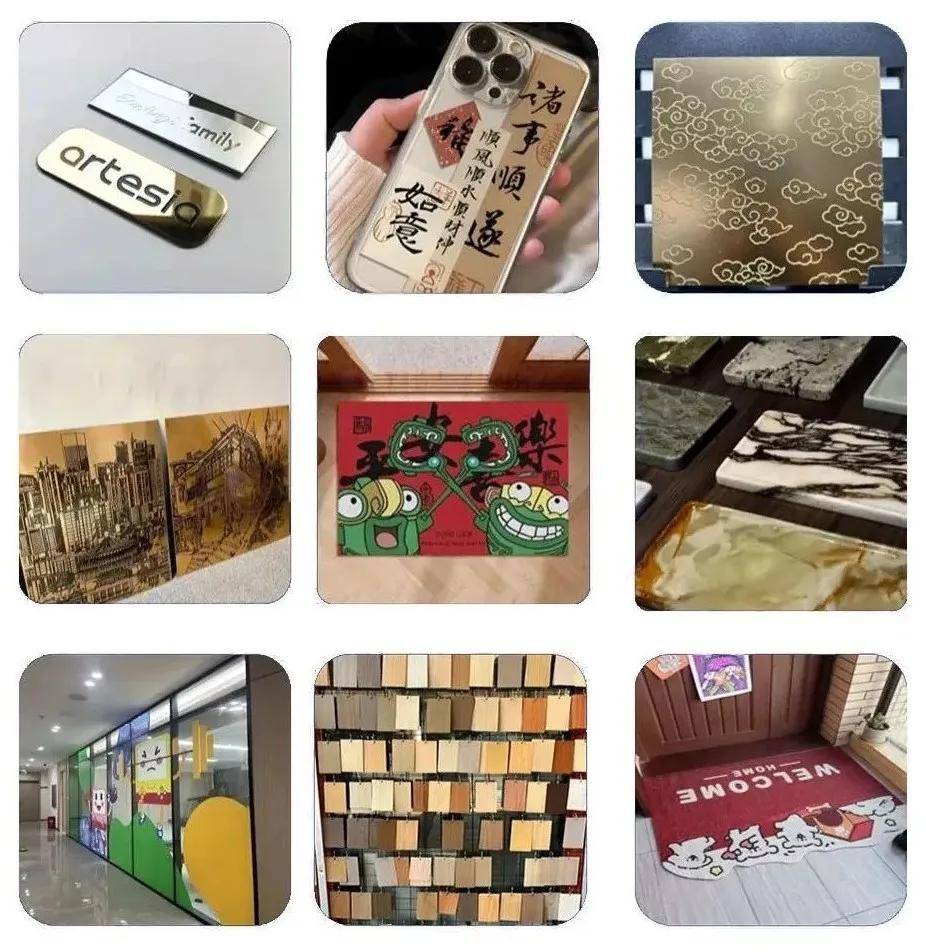
(3) Home Decor: Unique
Want to print photos on tiles? Need a custom pattern for your wallpaper? UV printers can make furniture and decorative materials unique, and even create 3D effects.
(4) Industrial sector: Durable markings
For electronic product casings, automotive parts, equipment nameplates, etc., UV-printed patterns are wear-resistant and corrosion-resistant, and will not become blurred even after long-term use.
(5) Artistic Creation: Any Material
Wood, glass, metal, leather... artists can use it to realize their wildest creative ideas, and even the details of handicrafts can be perfectly reproduced.
3. Its advantages and disadvantages
Advantages:
(1) High efficiency: It dries immediately after application, making it suitable for rushing to complete projects.
(2) High quality: vibrant colors and clear details.
(3) Wide range of materials: It can print on both soft and hard materials, as well as regular and irregular shapes.
(4) Saves time: Traditional printing requires waiting for the ink to dry, while UV printing skips this step.
challenge:
(1) High cost: The equipment is several times more expensive than a regular printer.
(2) Material limitations: A very small number of special materials (such as certain plastics) may have poor curing results.
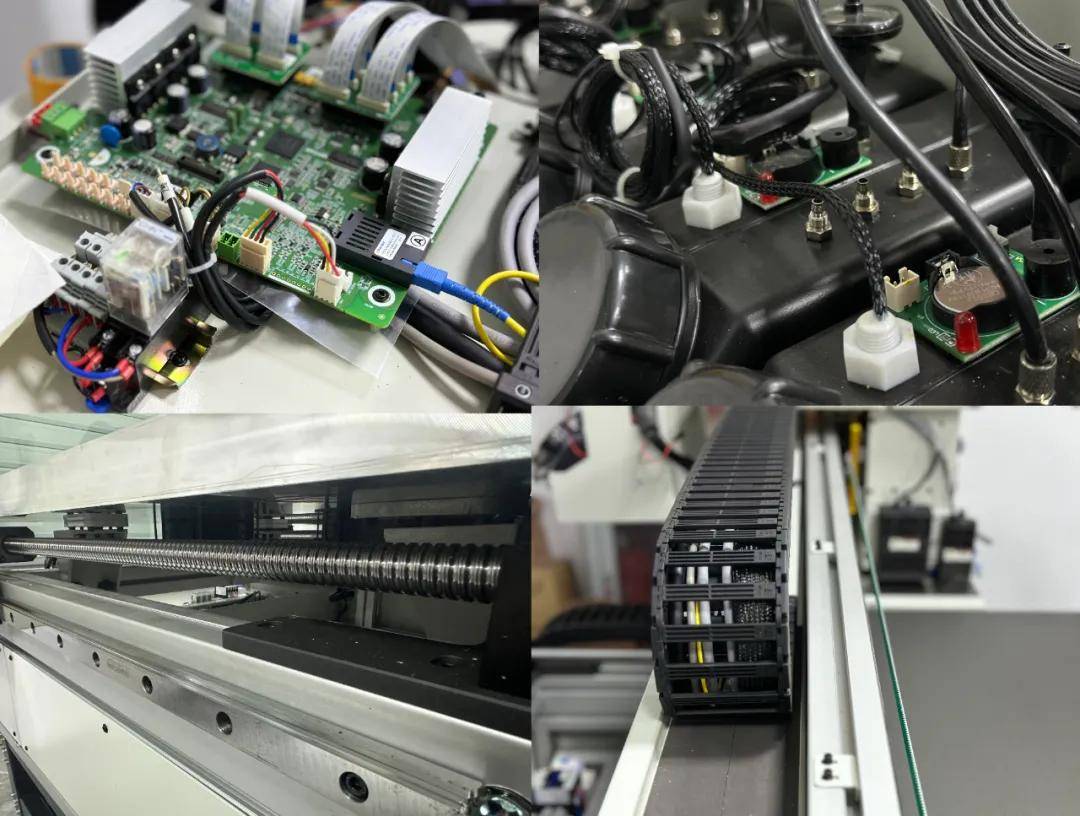
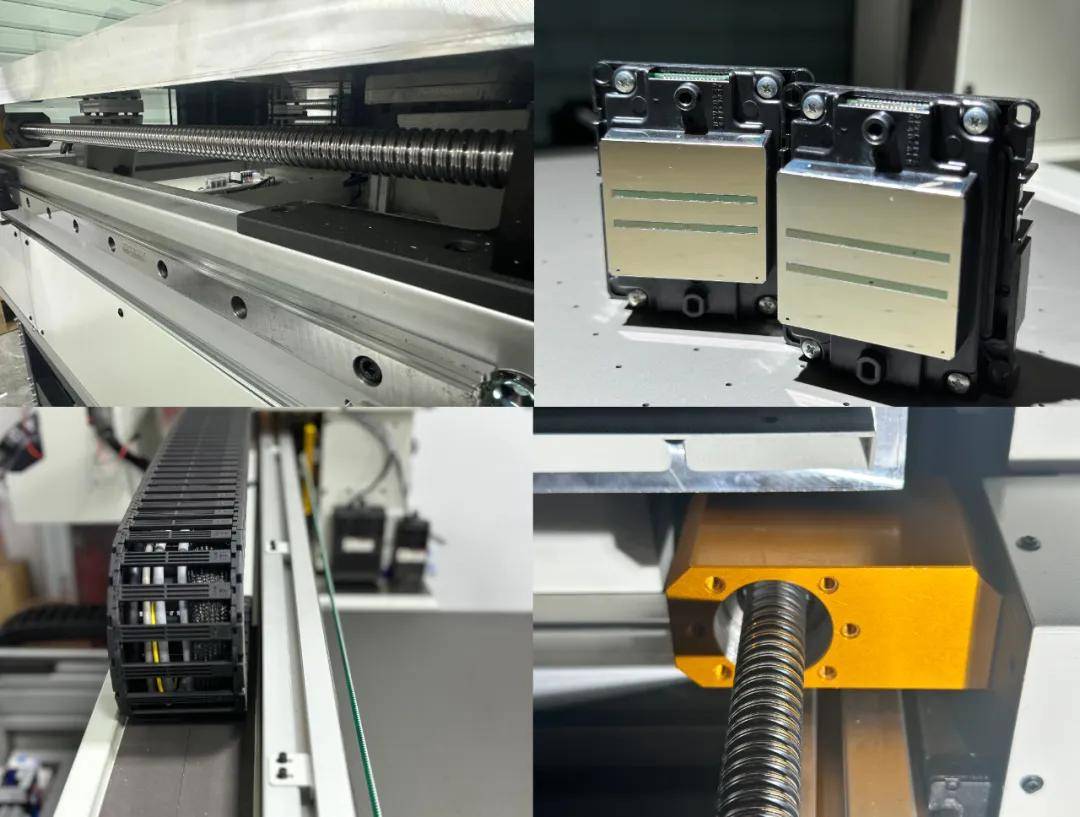
(3) Maintenance required: The nozzles need to be cleaned regularly, otherwise they may become clogged and affect the quality.
UV inkjet printers have revolutionized the printing industry with cutting-edge technology, applicable to virtually everything from advertising and industrial applications to home and art. While initial investment is significant, their efficiency, flexibility, and durability are making them increasingly attractive to businesses. In the future, with technological advancements, UV printers may become even cheaper and easier to use, becoming standard equipment in more fields. As a revolutionary force in digital printing, UV inkjet printers are reshaping the landscape of modern manufacturing with their groundbreaking technology.