
We know that the main difference between UV printing and other printing technologies lies in its curing method and ink.
Therefore, the UV lamp, as a curing tool, is of paramount importance to UV printing. We will take you to learn about the core component of a UV flatbed printer—the UV lamp .
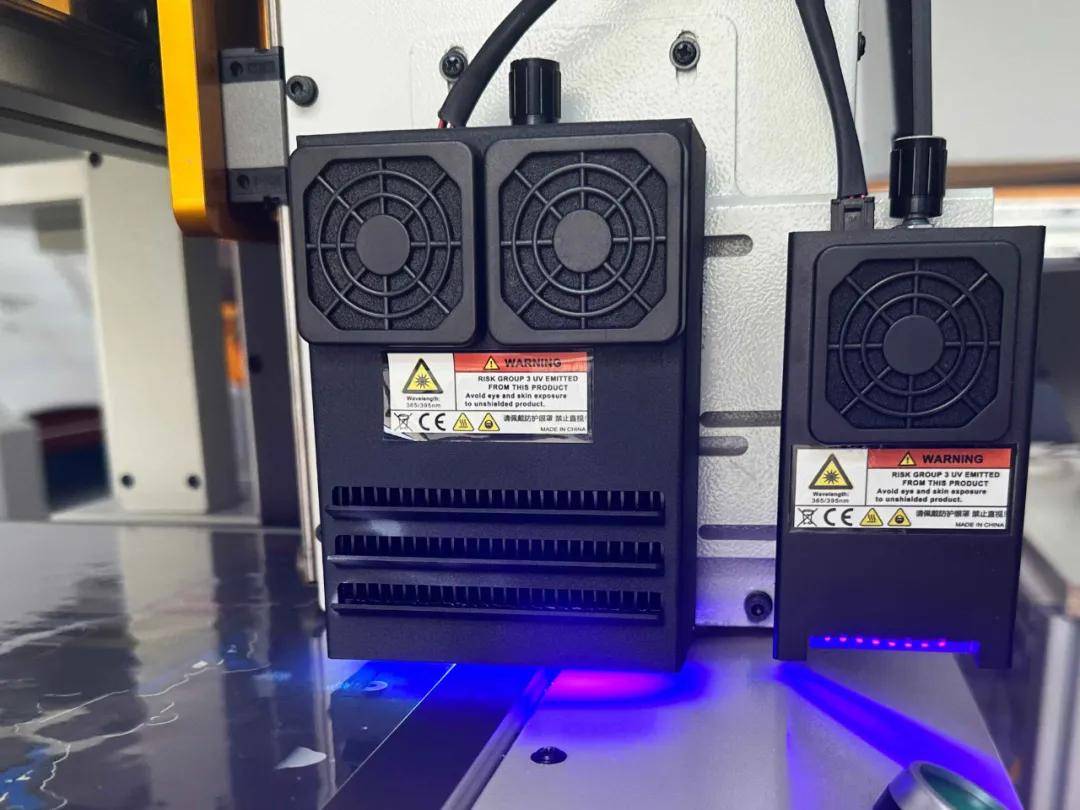
Definition and function of UV lamps
Top Printing | Giving manufacturing a soul and technology a warmth
Let's take a look at its definition:
UV lamps, also known as ultraviolet lamps, are abbreviated as UV (ultraviolet). Their most common application is in medicine for disinfection and sterilization. Beyond disinfection, UV lamps can also be used for product curing, medical testing, and, due to their properties, photochemical reactions, demonstrating their wide range of uses. In contrast, everyday fluorescent lamps and energy-saving lamps use ordinary glass, which blocks ultraviolet light, allowing it to be absorbed by phosphors and emitted as visible light. Germicidal lamps, on the other hand, use ultraviolet-transmitting glass or quartz glass, allowing ultraviolet light to pass through the glass tube walls.
In UV curing, the commonly used UV lamp is the arc discharge lamp. During UV printing, when the printhead sprays UV ink onto the material surface, the ultraviolet light emitted by the UV lamp reacts with the photosensitive curing agent in the ink, allowing the ink to dry quickly. The UV lamp in a UV printer mainly utilizes the properties of ultraviolet light to perform a photochemical reaction, thereby curing the ink. It acts as a "catalyst" for patterns, easily producing images in just 3 seconds, reducing the traditional curing process to a single step, and condensing 24 hours into 3 seconds.
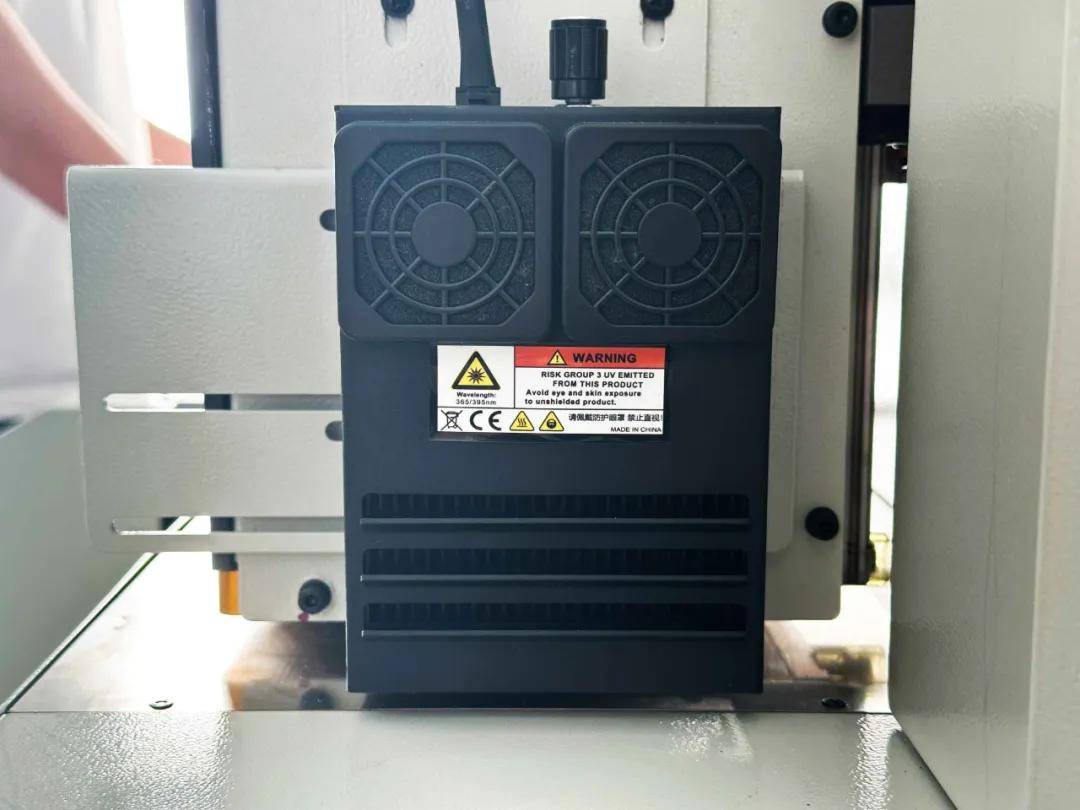
Structure and characteristics of UV lamps
Top Printing | Giving manufacturing a soul and technology a warmth
Depending on their structure, UV lamps can be categorized into: metal halide lamps, mercury vapor lamps, xenon lamps, electrodeless lamps, and UV LED lamps . In the past, mercury lamp printing equipment held a dominant market position due to its high heat output, low cost, good adhesion, and the low price of UV mercury lamps. However, with the development of the times and the increasing emphasis on environmental protection worldwide, safer and more efficient UV LED lamps have gradually replaced mercury lamps as the mainstream UV curing method.
UV LED curing lamps are curing devices used in UV flatbed printers. There are two common types on the market: one is a mercury lamp, which uses high-temperature baking to dry UV ink patterns, and the other is an LED cold light source lamp, which uses the ultraviolet light emitted by the lamp to react with the photosensitive curing agent in the UV ink to dry it.
LED cold light sources are further divided into two types: tube type and LED bead type. In practical applications, LED bead type is used more often than tube type in UV flatbed printers. In a standard configuration, a machine will be equipped with two UV LED curing lamps, placed on either side of the carriage.
LED lights have many advantages : long lifespan, low power consumption, low heat generation, mercury-free, and are cold light sources that do not produce ozone, making them safer, more environmentally friendly, and more stable.
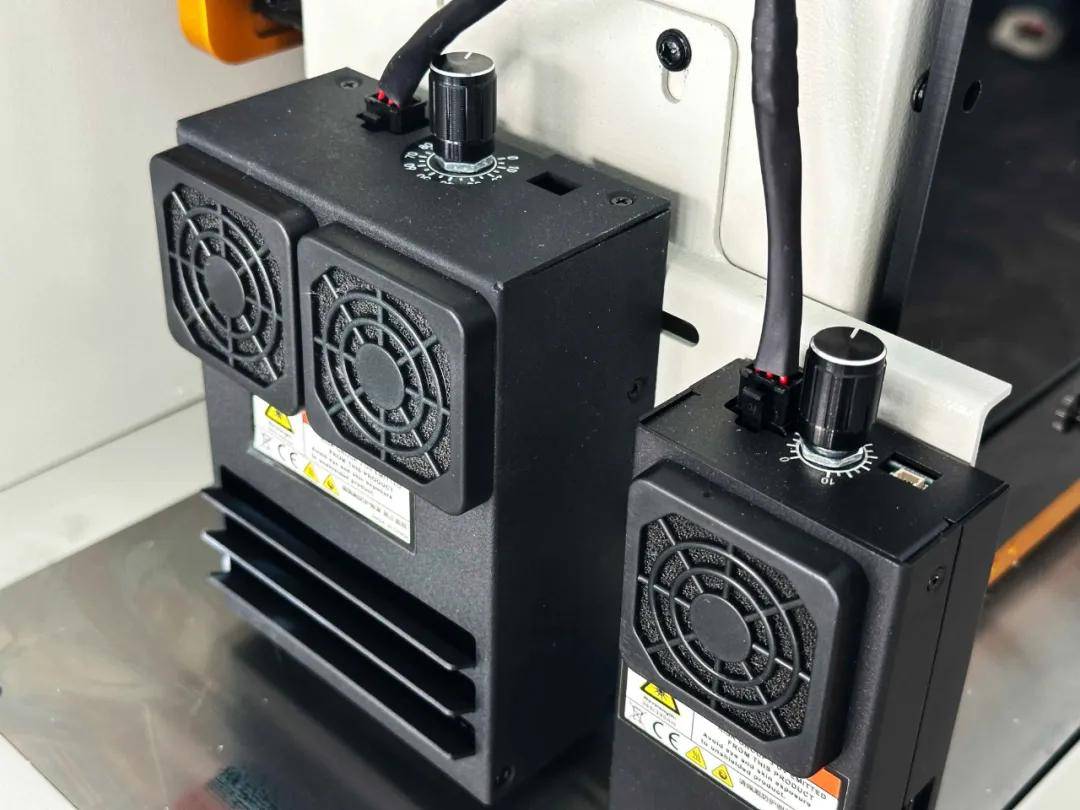
Illuminating the Future, Leading Innovation
From disinfection and sterilization to industrial curing, from the era of mercury lamps to the innovation of LED cold light sources, every breakthrough in UV lamps, as the core engine of UV printing, redefines the boundaries of efficiency, environmental protection, and quality.
In today's feature, we not only dissect the scientific logic behind the hardware, but also convey our thoughts on the future of the industry: when LED cold light sources reshape production standards with "zero mercury pollution, second-level curing, and ultra-long lifespan", and when intelligent control systems enable every light wave to precisely serve the realization of creative ideas, UV printing has long transcended its tool attributes and become a "catalyst of light" for industrial upgrading.
This year, Top Printing will continue to delve deeper into the "deep waters" of technology and empower customers to upgrade their value with systematic solutions. Because we firmly believe that the real driving force of the industry lies not only in the iteration of technical parameters, but also in ensuring that every ray of light carries the reverence for the temperature of manufacturing and the pursuit of the possibility of innovation.
See you in the next lecture!