
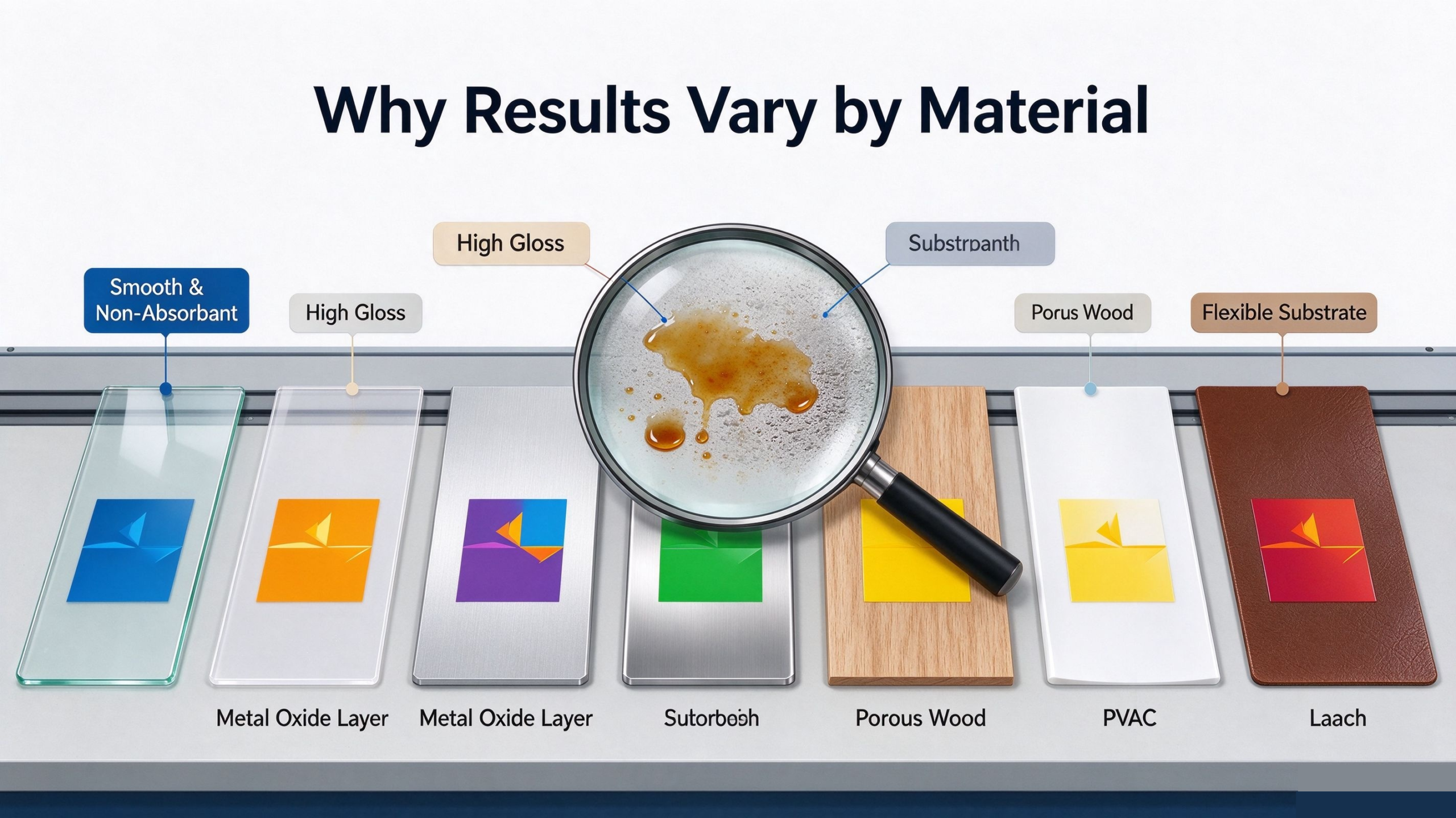
Many UV printer suppliers say UV printers can print on almost everything: glass, acrylic, metal, wood, PVC, leather. It sounds like UV printing is universal. However, if you have run UV printing production, you will find the truth is more complicated.
01 Why Can UV Printing Work on So Many Different Materials?
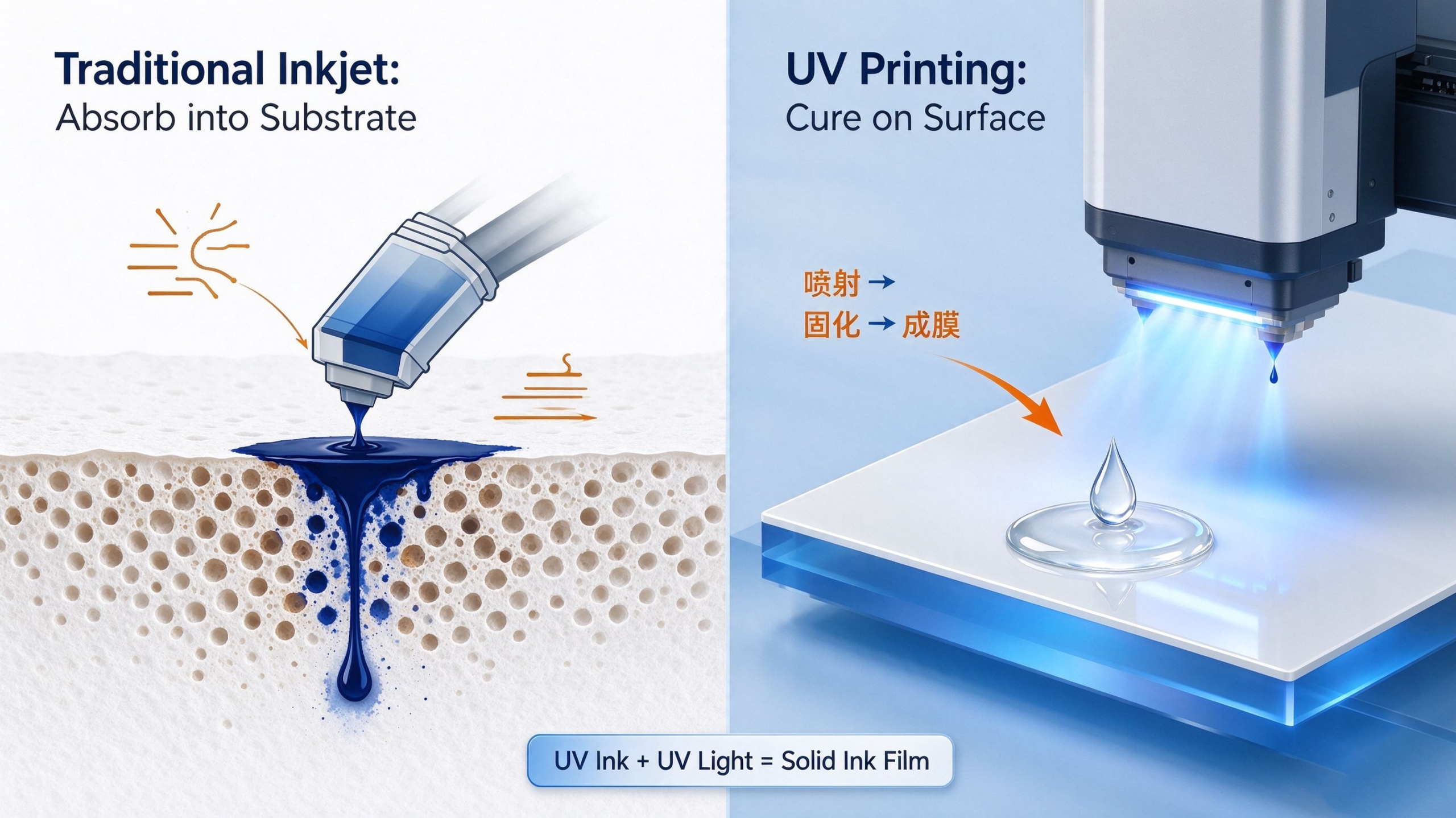
The core advantage comes from UV ink and UV curing. Traditional inkjet printing relies on substrate absorption. Ink sinks into pores of the material to dry. UV printing does not need the substrate to absorb ink. After ink droplets land on the surface, the UV lamp instantly triggers photochemical reaction. The ink cures and forms a solid ink film directly on the surface. That is why non-absorbent, smooth substrates can also be printed with UV technology.
02 Why UV Printing Works on Glass, Metal and Acrylic
UV Printing on Glass
Glass is smooth and non-porous. Normal ink will flow and cannot dry firmly. UV ink cures rapidly under UV light to form patterns on glass. Important note: Printing a pattern does not guarantee good adhesion. Oil residue, mold release agent and low surface energy will make ink peel off. For mass production, primer coating, plasma treatment or flame treatment are commonly used to improve adhesion.
UV Printing on Metal
Aluminum sheets, stainless steel and metal nameplates are typical non-absorbent substrates. Oil stains, oxide layers, existing coatings and surface roughness directly affect ink adhesion. A common issue: prints look perfect right after printing, but peel off after a few days. The problem is usually adhesion, not the UV printer itself.
UV Printing on Acrylic
Acrylic (PMMA) is one of the most popular substrates for UV printing. It is flat, transparent and widely used for signage, decorative panels and display boards. Clear acrylic with white ink + color ink backprinting creates special visual and embossed effects, which is a major advantage of UV digital printing.
03 Is UV Printing Truly Universal? Limitations for Stable Production
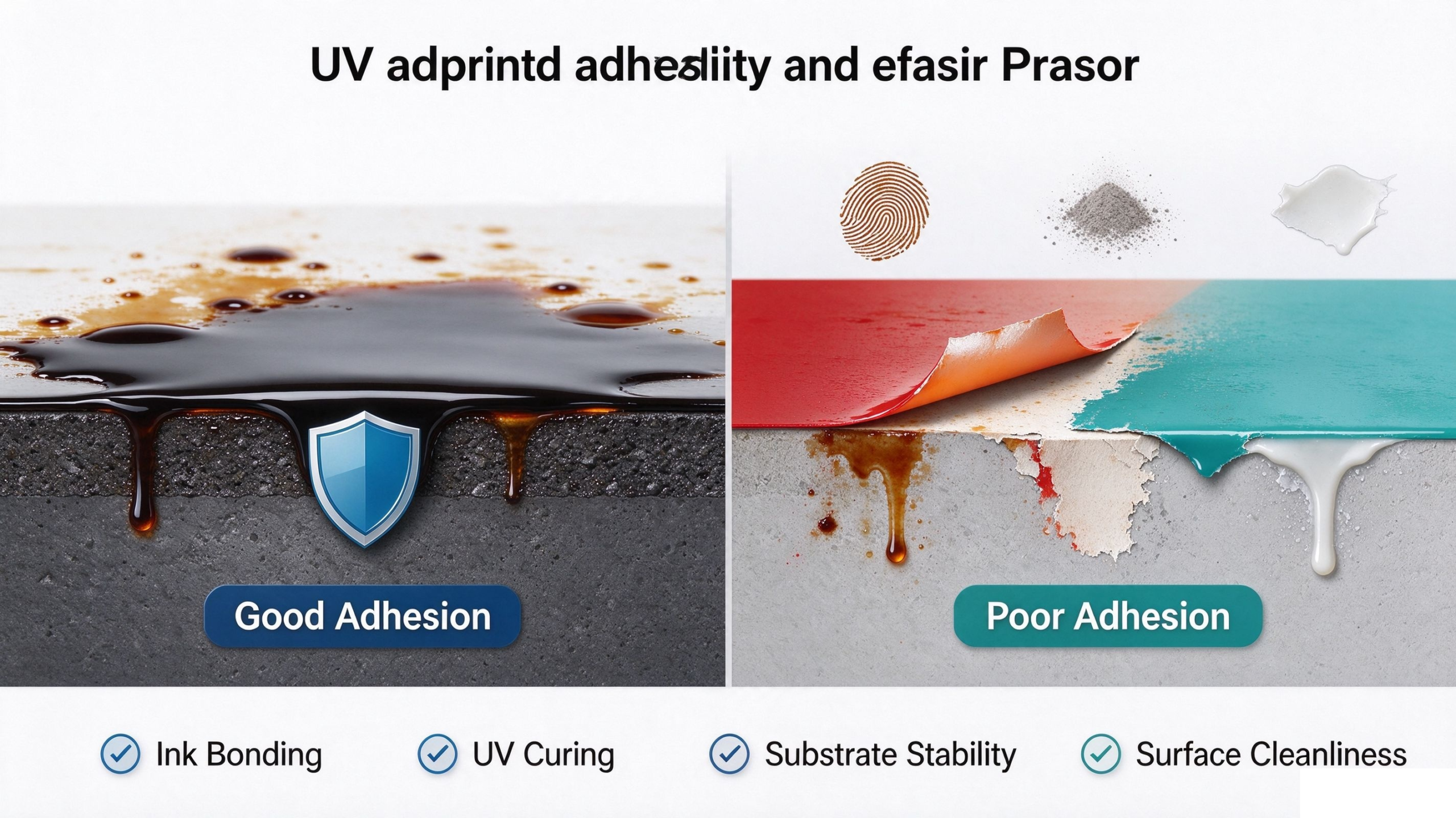
Answer: UV printing is NOT universal. Four factors decide whether a material is suitable for stable UV mass production:
- Ink adhesion: The ink film must bond tightly to the substrate, scratch-resistant and wear-resistant. Without good adhesion, the print has no commercial value.
- Complete UV curing: Some materials block UV light. Under-cured ink stays sticky, fades easily and has poor weather resistance.
- UV resistance of substrate: Long-term UV exposure may cause yellowing, brittleness and cracking of certain materials.
- Surface cleanliness: Dust, grease and release agent are the most common hidden causes of printing failure.
04 Why Printing Results Vary Even For The Same Material
Even with the same material name like acrylic or PVC, prints from different material suppliers can perform differently. Material formula, surface coating, surface energy, protective film and manufacturing process all change the printing result. UV printing depends not only on the material name, but on the actual surface condition of the substrate.
05 The Core of UV Printing: Test Samples Before Mass Production
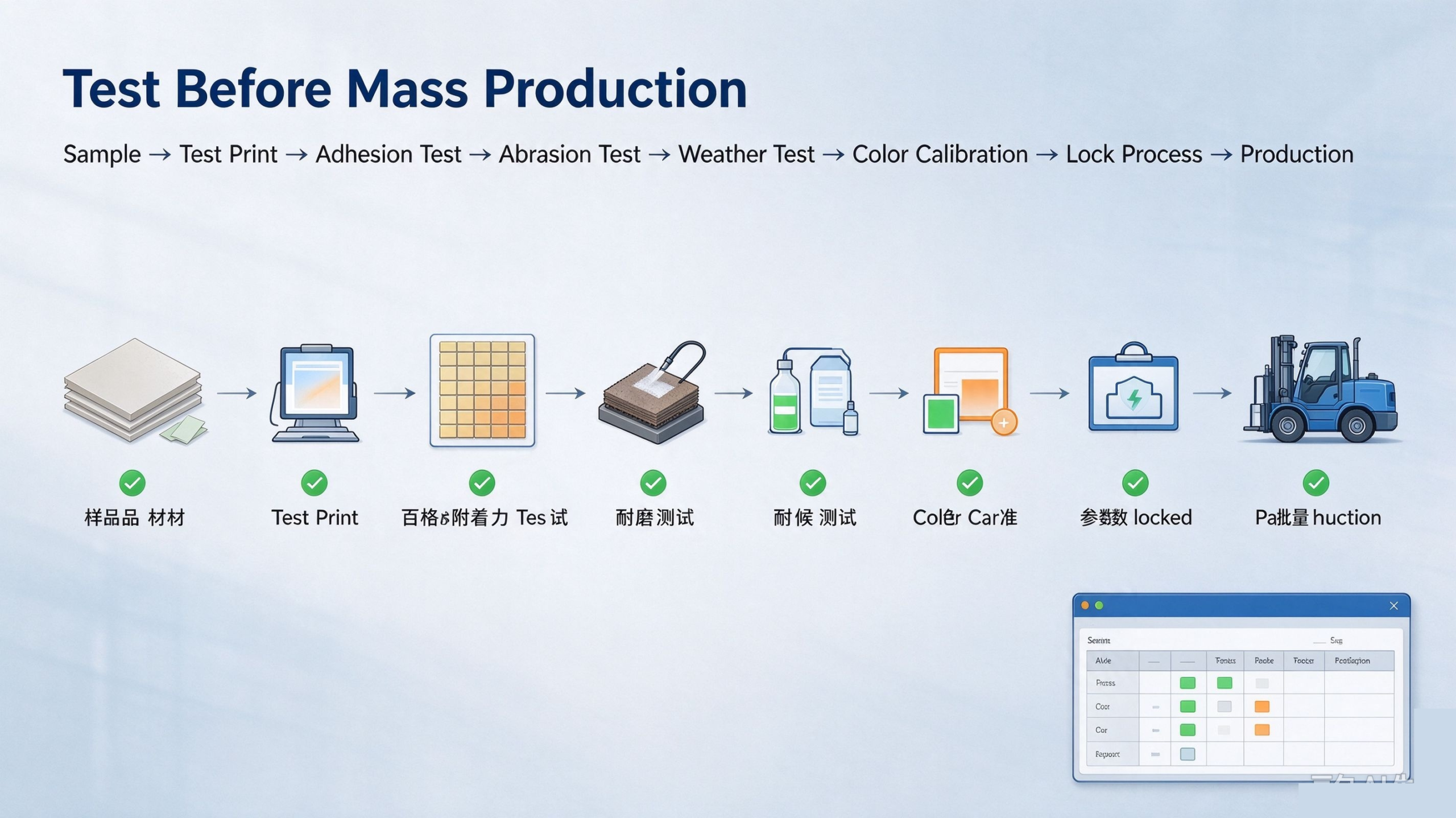
UV printing offers wider substrate compatibility, but it does not mean you can start mass production directly with any raw material. Standard industrial workflow: Send sample → Test print → Adhesion test → Scratch & abrasion test → Weather resistance test → Color calibration → Lock printing parameters & pre-treatment → Mass production A machine supporting glass printing does not mean you can print glass in bulk without testing.
Conclusion
UV printing can produce patterns on glass, acrylic, metal, wood, PVC and leather, powered by UV curing ink that does not require substrate absorption. Printable ≠ Stable for mass production. Durable results depend on the full process: ink selection, substrate surface status, UV curing setup, pre-treatment and printing parameters. Next time someone tells you UV printers print on everything, ask one question: Can it only print a sample, or run stable mass production? These are two different things.
CTA Do you need UV print sample testing for new substrates? TOP Printing provides substrate sampling, adhesion testing and custom UV printing process solutions. Send us your samples for evaluation.