
For anyone looking to enter the direct-to-film printing industry, choosing between an entry-level DTF printer and a professional-grade machine is a crucial decision. The market offers a wide price range, from budget-friendly starter kits under $3,000 to industrial-grade systems exceeding $15,000. Understanding the differences between these products will help you make an investment that best suits your needs. This guide will comprehensively analyze every key difference between entry-level and professional-grade DTF printers, helping you gain a clear understanding and make an informed choice.
The difference between entry-level and professional DTF printers goes far beyond the price tag. While both types of printers can produce high-quality prints, their differences in components, features, reliability, and after-sales support can significantly impact your daily operations, productivity, and long-term business growth. Many new buyers mistakenly believe that higher price equates to better quality, only to find themselves investing in features they don't need, or worse, purchasing unsuitable equipment that hinders business growth. This guide details the specific features of each printer level to help you avoid these costly mistakes.
In this analysis, we'll explore technical specifications, actual performance differences, total cost of ownership considerations, and strategic recommendations for different business scenarios. Whether you're starting a business for the first time or evaluating equipment upgrades, this information can help you find the printer with the highest ROI.
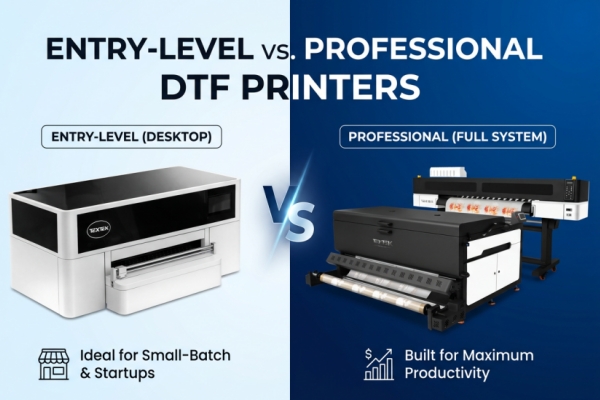
1.Understanding DTF Printer Categories
Before delving into the specific differences, it's essential to define entry-level and professional-grade equipment, as this lays the foundation for meaningful comparisons. Manufacturers don't always use the same terminology, so understanding the characteristics of each category can prevent confusion during your search.
(1) What is the definition of an entry-level DTF printer?
Entry-level DTF printers: These machines are designed for entrepreneurs just starting out in the fabric printing industry. They prioritize ease of use while offering sufficient performance for small-scale production, ensuring professional-quality results at a reasonable price. These machines typically feature a compact design, moderate production speeds, and cost-effective component selection rather than pursuing ultimate performance.
Entry-level printers are ideal for helping novice operators learn operating skills without a large capital investment. They are perfect for testing business ideas, developing skills, and building initial customer relationships before scaling up operations. However, as business grows and production demands increase, the limitations of these machines will gradually become apparent.
Most entry-level DTF printers are priced between $2,000 and $4,500, though occasional promotions or basic configurations may cost slightly less. At this price point, you can get a functional device suitable for learning and small-scale production, rather than an industrial-grade device designed for demanding commercial environments.
(2) What is the definition of a professional DTF printer?
Professional DTF printers represent a higher level of performance, designed for operators who require reliable daily production and are not limited by entry-level systems. These machines feature enhanced components, greater throughput, advanced automation, and a design focused on extending turnaround times. They are suitable for a wide range of users, from growing small businesses to established production facilities.
Professional printers typically cost between $5,000 and $15,000, with the most powerful systems costing even more. At this investment level, you get equipment designed for stable, daily production – a machine that reliably completes orders with minimal downtime or unexpected breakdowns, meeting industrial-grade standards.
High-end specialized systems – machines designed specifically for high-volume production environments where output and reliability are more critical than initial cost. These systems represent a significant investment and are suitable for companies with proven operating models and validated needs.
2.Printhead technology: the core of the system
The printhead is the most critical component that differentiates entry-level and professional DTF printers. Understanding the differences in printheads helps explain the significant price differences and the performance of different machines in real-world usage environments.
(1) Entry-level printhead options
Most entry-level DTF printers use small printheads designed for consumer or light business applications. The Epson XP600 often falls into this category—it has a decent printhead that is inexpensive to produce, but it's not suitable for everyday business printing needs.
Systems based on the XP600 offer decent print quality and, with proper maintenance, can produce impressive results. However, they have smaller ink tanks requiring more frequent cleaning, shorter lifespans compared to professional-grade products, and limited production speed due to their design. These limitations are rarely a concern for users printing dozens of transfer sheets per week. But for growing businesses handling hundreds of prints daily, these limitations become particularly significant.
Some entry-level systems use newer or less common printheads, which may offer better performance, but long-term spare parts supply and support can be challenging. When evaluating entry-level machines, it is essential to review the printhead's usage history and ensure a continued availability of replacement parts.
(2) Professional printhead options
Professional-grade DTF printers commonly use the Epson i3200 printhead—a high-performance printhead that has become standard in the commercial textile printing industry. Compared to entry-level products, the i3200 boasts a larger ink tank, longer lifespan, faster ejection speed, and more stable droplet positioning.
These features translate directly into practical advantages: higher production speeds without sacrificing quality, longer maintenance intervals, fewer printhead-related issues, and significantly extended component lifespan. While the i3200 printhead replacement cost is higher than the XP600, its extended lifespan typically makes the printer's total cost of ownership over its lifespan comparable to or even lower.
Professional printers can also employ various printhead configurations to enhance productivity—for example, a dual printhead configuration can nearly double throughput, or enable simultaneous white and color printing. These configurations can significantly accelerate high-volume production.
The performance difference between entry-level and professional printheads is most pronounced during long periods of continuous production. Entry-level machines may require multiple cleanings when handling large volumes of orders, and component overheating can lead to decreased print quality or significantly extended completion times. Professional equipment, on the other hand, can maintain stable output for hours on end.
3.Production speed and output
Speed is crucial in commercial printing operations, but understanding the nuances of speed specifications can help you assess whether a machine's rated performance meets your actual requirements.
(1) Entry-level speed ability
Entry-level DTF printers typically have a maximum print speed of 2 to 8 square meters per hour, depending on the model and configuration. However, these maximum speeds are achieved under ideal conditions—usually printing simple patterns at the lowest resolution settings.
In actual production, for typical designs—such as multi-color graphics, photographic images, or designs requiring high detail—usually only 40% to 60% of the rated speed can be achieved. An entry-level printer with a rated speed of 6 square meters per hour may only achieve a high-quality output of 2.5 to 3.5 square meters per hour under actual production conditions. This is acceptable for small-scale production, but it becomes insufficient as order volumes increase.
(2) Professional speed advantage
Professional DTF printers offer higher printing efficiency; high-performance machines can print 15-25 square meters per hour at high-quality settings, while the fastest industrial-grade systems can print over 30 square meters per hour. This speed directly translates to order fulfillment volume—the higher the print volume per hour, the greater the potential revenue within the same operating time.
Beyond speed, professional machines maintain consistent quality while operating at high speeds. Entry-level systems may suffer from streaking, inconsistent colors, or loss of detail when pushing for maximum output power, whereas professional machines do not. Choosing Between Entry- Level DTF Printers For anyone looking to enter the direct-to-film printing industry, selecting a professional-grade machine is one of the most crucial decisions. The market offers a wide price range—from economical entry-level kits under $3,000 to industrial-grade systems exceeding $15,000—understanding the differences between these products will help you make an investment that suits your actual needs. This guide comprehensively analyzes every key difference between entry-level and professional direct-to-film printers, providing you with the clear information you need to make a confident choice.
The difference between entry-level and professional DTF printers goes far beyond the price tag. While both types of printers can produce high-quality prints, their differences in components, features, reliability, and after-sales support can significantly impact your daily operations, productivity, and long-term business growth. Many new buyers mistakenly believe that higher price equates to better quality, only to find themselves investing in features they don't need, or worse, purchasing unsuitable equipment that hinders business growth. This guide details the specific features of each printer level to help you avoid these costly mistakes.
In this analysis, we'll explore technical specifications, actual performance differences, total cost of ownership considerations, and strategic recommendations for different business scenarios. Whether you're starting a business for the first time or evaluating equipment upgrades, this information can help you find the printer with the highest ROI.
4.Quality and reliability
Equipment reliability determines whether your printer will help your business grow or cause ongoing problems. The structural differences between different types of printers directly affect their long-term performance.
(1) Entry-level architectural features
Entry-level DTF printers are designed for cost optimization, prioritizing ease of use while maintaining functionality. Their frames may use lighter materials, component quality may be only at a subpar level rather than a high-end level, and the assembly design is intended to meet reasonable performance expectations rather than industrial-grade durability standards.
This doesn't mean entry-level machines are of poor quality—most entry-level machines are of sufficient quality for their intended use. However, they are designed for intermittent use, not continuous production. Compared to specialized equipment, entry-level machines require more routine maintenance, stricter operating procedures, and more frequent parts replacements.
Entry-level construction machinery is intended to help new operators launch businesses with lower investment, so its performance is well-balanced. Pushing these machines beyond their design parameters will inevitably lead to problems.
(2) Professional construction advantages
Professional-grade DTF printers feature an enhanced design, specifically tailored for demanding business environments. The heavier chassis provides a stable platform for precise printhead operation. Higher-quality components—motors, belts, sensors, and mechanical parts—are used throughout the machine, extending its lifespan and improving its durability.
These machines are designed for continuous daily operation. Their components are rated to withstand long-term operation, the cooling system is carefully designed to ensure continuous and stable operation, and the overall structural quality guarantees their reliability under years of high-intensity use.
The most obvious difference in reliability is in uptime. A professional printer can run reliably for years with very few unexpected problems, while an entry-level printer used in the same production environment may require frequent maintenance or even experience frustrating malfunctions. For businesses where equipment downtime directly impacts revenue, this difference in reliability often justifies the higher investment.
5.Automation and workflow functions
Advanced features that enhance operational efficiency differentiate specialized machines from basic ones. These automation and workflow improvements significantly boost daily productivity.
(1) Entry-level feature set
Entry-level DTF printers offer basic functionality but lack advanced automation features. Typical features include basic startup and shutdown procedures, manual media handling, and basic RIP software with limited functionality. Operators need to perform more steps manually, which increases the labor cost per print and lengthens the learning curve.
This manual operation itself is not problematic—it's appropriate for the service scale of these machines. Operators who print occasionally can use manual operation without significantly increasing time costs. Its limitations only become apparent as production volume increases.
(2) Advantages of professional automation
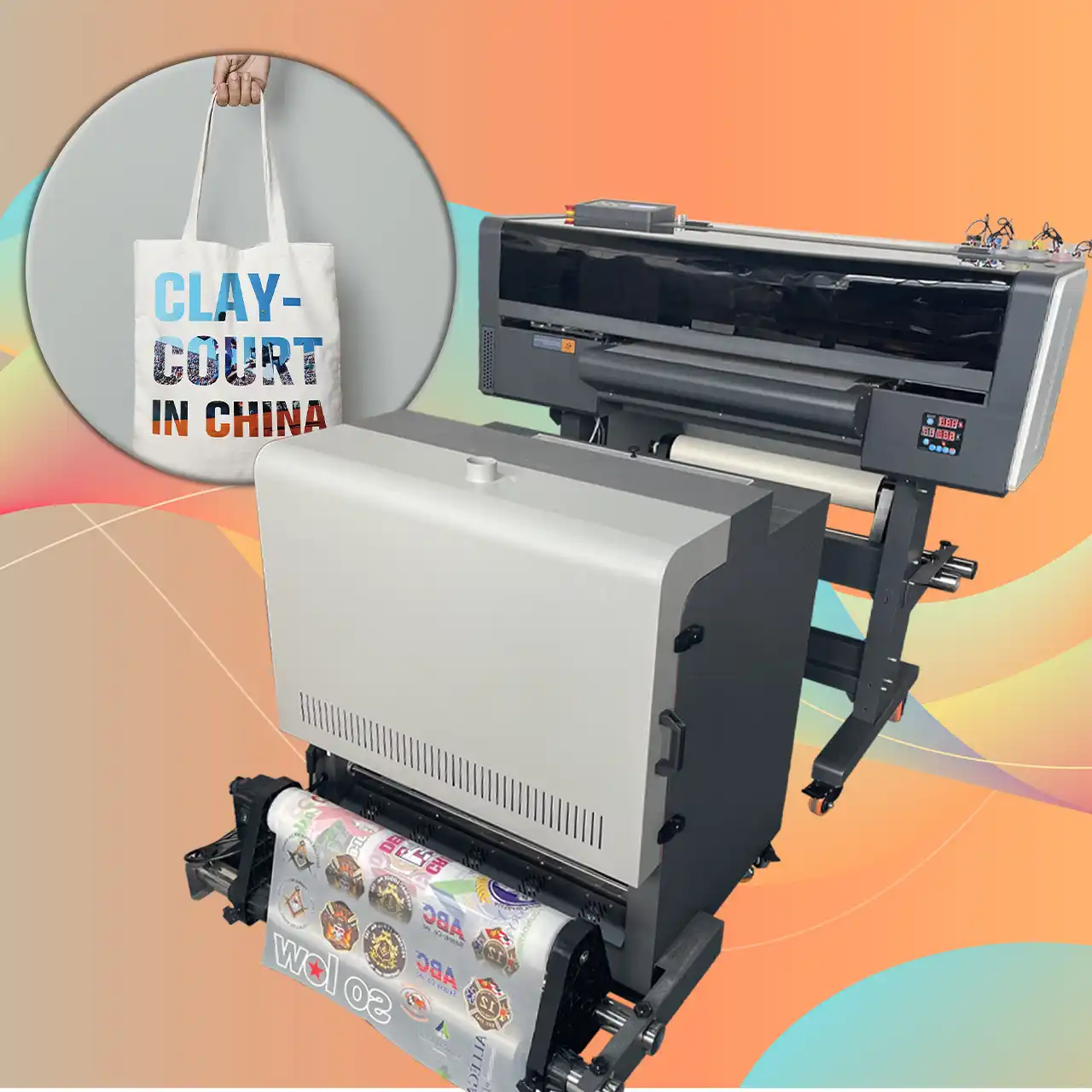
Professional DTF printers integrate a wealth of automation features to accelerate production and reduce manual labor requirements. Automatic white ink circulation prevents ink buildup, ensuring consistent white layer quality—crucial for printing on dark fabrics. Automatic cleaning maintains the printhead in optimal condition with minimal operator intervention. Advanced RIP software provides comprehensive tools for color management, batch processing, and production optimization.
Some specialized systems are equipped with automatic paper feed and take-up devices, enabling long-term unattended operation. Media roll loaders reduce the frequency of paper changes. These features significantly increase output per work hour—a crucial factor as businesses scale and labor costs rise.
For large-scale production operations, these automation features typically deliver a return on investment far exceeding basic capability improvements. Reducing the number of workers required for each print job directly increases profitability.
6.RIP software: critical production infrastructure
The RIP (Raster Image Processing) software that controls a printer has a significant impact on print quality and operational efficiency. The differences between different types of software are often overlooked, but they can have a profound effect on your user experience.
(1) Notes on beginner software
Many entry-level DTF printers come with basic RIP software sufficient for simple production tasks. This type of software typically offers limited color management features, basic layout tools, and minimal batch processing capabilities. It may suffice for simple projects, but it can be overwhelming for operators dealing with complex designs, applications with extremely high color accuracy requirements, or high-volume production.
Some entry-level software packages require the separate purchase of RIP software, which increases the total investment. Careful evaluation of the included packages is essential—cheap hardware paired with expensive bundled software may not be as cost-effective as it initially seems.
(2) Professional software functions
Professional DTF printers are typically equipped with more powerful RIP software, featuring advanced color management, sophisticated layout and splicing tools, batch production capabilities, and extensive customization options. This software supports the creation of color profiles for specific inks and substrates, enabling finely detailed repeating pattern layouts to improve media utilization, supporting automated production workflows, and integration with design and e-commerce systems.
Using advanced RIP software can significantly improve production efficiency. Tasks that require manual completion with basic software, such as preparing imposition orders, managing color profiles, and processing multiple orders, can be streamlined and automated using specialized tools.
7.Total Cost of Ownership Analysis
Evaluating equipment investments requires considering not only the purchase price but also the comprehensive total cost of ownership. This analysis can reveal the true economic benefits of each investment.
(1) Entry-level cost considerations
Entry-level DTF printers offer an attractive initial purchase price, but their ongoing costs warrant careful evaluation. Consumable efficiency may be lower, requiring more ink, film, or toner per print. Shorter component lifespans mean printheads, belts, and other wear-prone parts need more frequent replacement. Potential downtime can impact revenue. Support options may be limited or require additional payment.
These factors don't necessarily mean that entry-level equipment is bad—they simply represent different cost structures. For truly small-scale operations with very low production demands, lower initial investment often yields higher returns, despite higher unit operating costs.
(2) Professional Investment Returns
While professional DTF printers have a higher initial cost, they typically offer better long-term economic benefits. Higher consumable efficiency reduces ongoing operating costs. Longer component lifespan reduces replacement expenses. Superior reliability prevents lost revenue due to unexpected downtime. More comprehensive support services allow for faster problem resolution.
For any business with a substantial production capacity, these factors typically offset the impact of initial cost differences within the first year or two of operation. Sometimes, the "cheaper" option can actually be more expensive in the long run.
8.Support and warranty differences
The infrastructure that supports your purchase can protect your investment and impact your experience as an operator.
(1) Beginner Support Notes
Entry-level DTF printers typically have limited warranties, generally 6-12 months, and some parts may have limited coverage. Technical support may be limited to email or general channels. Response times may be slow, and warranty claims processes may be more complex.
This doesn't mean after-sales support is poor—many entry-level vendors offer reasonable assistance. However, the depth and responsiveness of their support often differ from what professional equipment buyers receive.
(2) Professional support advantages
Professional DTF printers typically offer more comprehensive warranties, usually 12-24 months, and cover a wider range of components. Support channels may include telephone and live communication. Response times for technical issues are usually prioritized. Additionally, extended warranty options may be available for extra protection.
For businesses whose revenue is directly impacted by equipment issues, rapid response support can provide a great sense of security and potentially prevent costly, prolonged downtime.
9.Make the right choice based on your own circumstances.
By fully understanding the differences between the various categories and applying that knowledge to your specific situation, you can determine the best option.
(1) If you meet the following criteria, please select an entry-level printer...
Entry-level DTF printers are a suitable choice in certain situations. If you are new to printing and want to learn the technology without taking on significant financial risk, an entry-level device will suffice. If your business model involves very low output—dozens of prints per week instead of hundreds—then these limitations usually won't have a major impact on your operations. If budget constraints truly prevent you from investing in professional equipment, starting with an entry-level device and upgrading later is a viable strategy.
Many successful printing businesses start with entry-level equipment, gradually upgrade their skills and customer base, and then upgrade only when their business grows enough to support further investment. This development path is wise if you need to validate your business model before investing heavily.
(2) Choose a professional printer if you...
For most growing businesses, a professional DTF printer is the better choice. If you have defined production needs and require reliable daily output, professional equipment provides the necessary capabilities. If your business needs exceed the capacity of entry-level equipment, investing in professional equipment will help your business continue to grow. If your operations cannot afford equipment downtime, the reliability of professional equipment will protect your revenue. If you are upgrading existing equipment and understand your needs, professional equipment provides the right performance.
For anyone seriously looking to build a sustainable printing business, the general advice is to use specialized equipment. The performance, reliability, and support advantages of specialized equipment are usually enough to offset the higher investment costs in the first year of operation.
9.Realistic cost expectations
Understanding the actual costs helps you create a reasonable budget and avoid unexpected situations during the purchasing process.
(1) Entry-level investment scope
A complete entry-level DTF printing system typically costs between $3,000 and $5,000, including a printer, a basic heat press, essential accessories, and initial supplies. For entrepreneurs serious about starting a printing business, this is indeed a viable starting point.
This investment provides practical equipment capable of delivering high-quality prints for small-scale operations. It's not inferior—it perfectly meets entry-level needs.
(2) Professional investment scope
A professional DTF printing system typically costs between $7,000 and $15,000 or more to purchase the equipment, a full set of accessories, and initial inventory. This is a significant investment, but it also provides the necessary capacity to support large-scale production operations.
The equipment provided by this investment is suitable for building a sustainable business and will not limit your growth potential in any way.
10.Conclusion: Invest in your future
Choosing between entry-level and professional DTF printers ultimately reflects your commitment to building a sustainable business. Entry-level devices are ideal for learning and small-scale operations—they offer practical functionality without a large initial investment. Professional devices, on the other hand, are suitable for growing businesses that require reliable, powerful equipment to meet their production needs.
Generally speaking, if you genuinely want to establish a printing business, rather than just experimenting, then professional equipment is usually the best foundation. Its performance, reliability, and support advantages directly translate into a better customer experience, more efficient operations, and stronger business growth.
Top Printing offers DTF printing solutions across two main categories, with equipment designed to meet the needs and development stages of different businesses. Our team understands that the right choice depends on your specific circumstances, so we provide personalized consultation services to help you find the equipment that best suits your needs.
Ready to discuss your equipment needs?
Whether you're just starting out or looking to upgrade, Top Printing's experts can help you find the perfect DTF printer for your business. Contact our team for personalized advice based on your production needs, budget, and growth goals.