
Faced with the dazzling array of UV printers on the market, are you overwhelmed and unsure where to start? Why such a huge price difference, ranging from tens of thousands to hundreds of thousands? Don't worry, this guide will take you on an in-depth exploration of UV printing.
Unlock the secrets of the machine and help you accurately identify your needs, finding the most cost-effective "wealth-creating tool"!
1. UV Printers: What exactly is their "magic"?
Before delving into pricing and selection, let's unveil the mystery of UV printers. It's not simply an upgrade from traditional printing; it's a technological revolution.
A UV printer, or UV curing inkjet printer, is a digital printing device that uses the piezoelectric inkjet printing principle. Its core "magic" lies in the use of special UV ink, which is instantly cured and adhered to the substrate surface by ultraviolet (UV) light during the printing process. This means it can "print from the air," without direct contact with the material surface, thus greatly expanding the printing range. It can print on virtually anything, from hard glass and tiles to flexible leather and soft films.
2. Price Kaleidoscope: The "Behind-the-Scenes Drivers" Influencing the Value of UV Printers
The price range for UV printers is extremely wide, ranging from entry-level models costing tens of thousands of yuan to high-end imported models costing millions of yuan. This is the result of a combination of many factors.
The core factors influencing the price of UV printers mainly include:
Printhead: This is the heart of a UV printer, directly determining printing accuracy, speed, and stability. Different brands (such as Epson, Ricoh, Kyocera, Konica, etc.) and models of printheads vary greatly in price. Industrial-grade printheads are generally more expensive than consumer-grade printheads but offer superior performance.
Equipment Size and Structure: The larger the printing area, the higher the requirements for the machine's structural stability and guide rail precision, naturally increasing the cost. Industrial-grade equipment typically employs a more robust steel frame structure.
Brand and Technology: Unknown brands often invest more in R&D, quality control, and after-sales service, resulting in relatively higher product prices. The level of mastery of core technologies, such as circuit board control systems and ink system components, is also an important factor.
Configuration and functions: For example, whether it is equipped with white ink and varnish printing functions, and whether it has intelligent systems such as automatic height measurement, anti-collision, and negative pressure ink supply, will affect the price.
Ink and curing system: The quality of UV ink, color configuration (such as CMYK+W+V), and type of UV curing lamp (LED lamps are more environmentally friendly and energy-efficient than mercury lamps, and have a longer lifespan, but the initial cost may be slightly higher) are also included in the total cost.
After-sales service: Comprehensive installation, training, warranty and technical support are the guarantee for the long-term stable operation of equipment, and this part of the value should not be ignored.
3. A Grand View of Types: Which UV printer is your "chosen one"?
Having understood the price structure, let's take a look at the mainstream UV printer types on the market, their characteristics, and approximate price ranges to help you find the right fit.
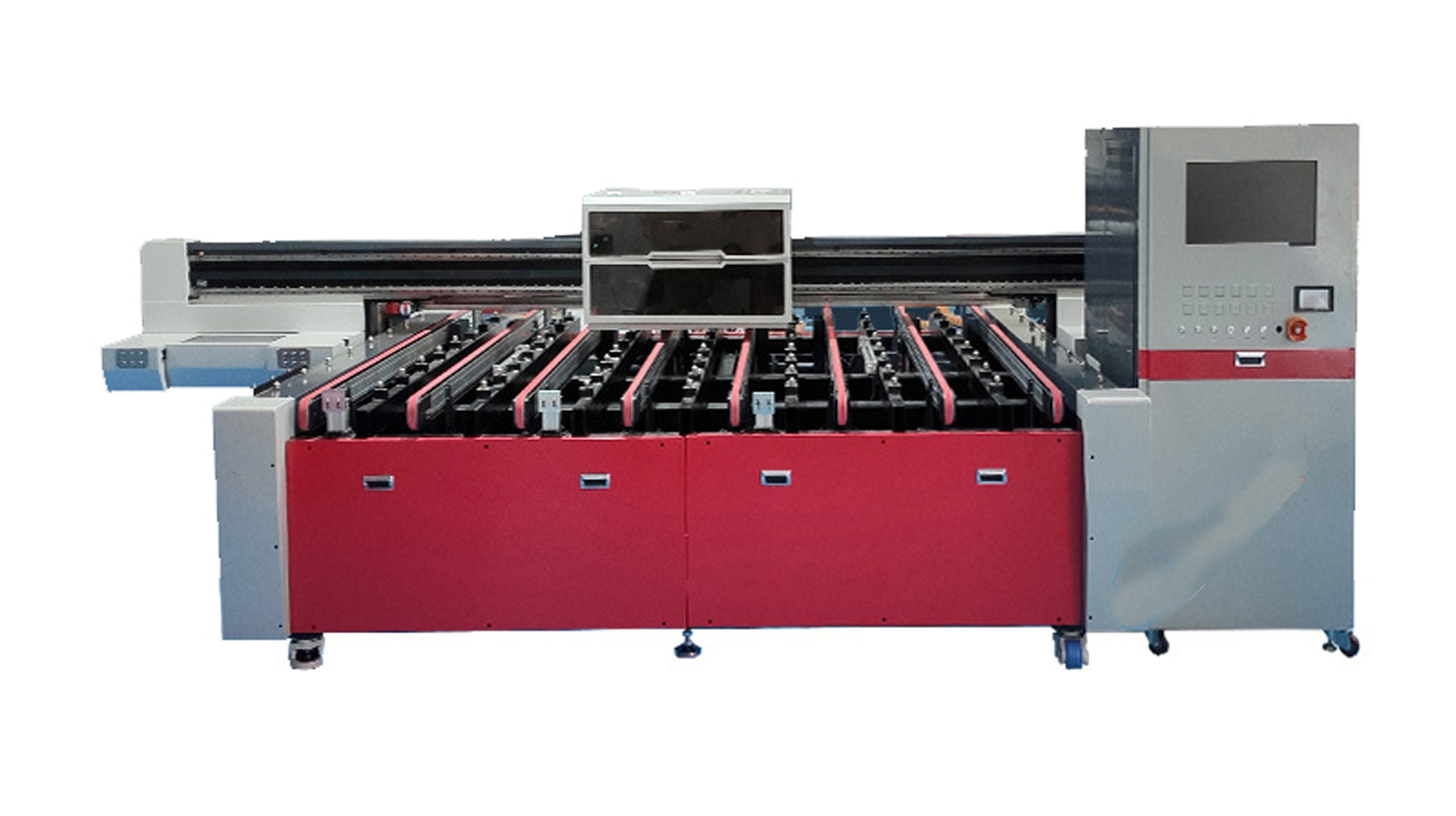
(1). Flatbed UV Printer: A Powerful Performer
Designed specifically for rigid or heavy flat materials such as PVC, acrylic, wood panels, glass, ceramic tiles, and metal sheets (Source: Zhihu). It is a powerful tool in the fields of advertising signage, home décor, and personalized customization.
Price range: Generally speaking, the price of a small, entry-level flatbed UV printer may be tens of thousands of yuan, while large-format, high-configuration models with industrial production capabilities may reach hundreds of thousands of yuan or even higher. For example, equipment under 50,000 yuan is mostly modified or small-scale civilian use, suitable for first-time entrepreneurs; the 80,000-130,000 yuan range may be for low-configuration large-scale civilian use or high-configuration small-scale industrial use; the 130,000-200,000 yuan range is mostly for standard industrial use; and above 200,000 yuan tends to be for high-configuration large-scale industrial use or top-of-the-line models.
(2). Roll-to-Roll UV Printer: A Gentle and Versatile Star
It excels at working with flexible roll materials such as stretch film, lightbox fabric, vehicle wraps, wallpaper, and leather. The advertising printing and interior design industries highly favor it. Some models also feature roll-to-plate printing capabilities, compatible with flatbed materials.
Price Range: The price of roll-to-roll UV printers is also affected by factors such as print width, printhead configuration, and printing speed. Small, narrow-width roll-to-roll printers may be priced similarly to entry-level flatbed printers, while wide-width (e.g., 3.2 meters or even 5 meters), high-speed industrial-grade roll-to-roll printers will be significantly more expensive, ranging from tens of thousands to hundreds of thousands of yuan. Specific prices depend on the actual configuration and brand.
(3). Industrial-grade UV printer: a behemoth of efficiency
These printers are designed for high-volume, high-intensity, and high-efficiency production. They typically feature larger print areas, faster print speeds, more stable operation, and more durable components. They also have more robust frame structures and higher levels of automation.
Price range: Industrial-grade UV printers (whether flatbed or roll-to-roll) typically have a high starting price, generally above 200,000 RMB. High-end equipment, imported brands, or models with special customized functions can cost hundreds of thousands or even millions of RMB.
(4). Small Desktop UV Printer: A Creative Incubator
Compact in size, with relatively small printing areas (such as A3, A4, or slightly larger), and easy to operate, they are ideal for small studios, startups, personalized gift shops, or SOHO workers. They are the perfect tool for realizing creative ideas and small-batch production.
Price range: Small desktop UV printers are relatively affordable, generally ranging from several thousand to tens of thousands of RMB. For example, some entry-level small flatbed printers are priced between 20,000 and 50,000 RMB, while even smaller home or entry-level business models may be cheaper.
4. Selection Compass: Precisely Determine Your UV Printing Needs
After understanding the different types of UV printers and their approximate prices, how can you make an informed choice based on your own needs? The following two key points will guide you.
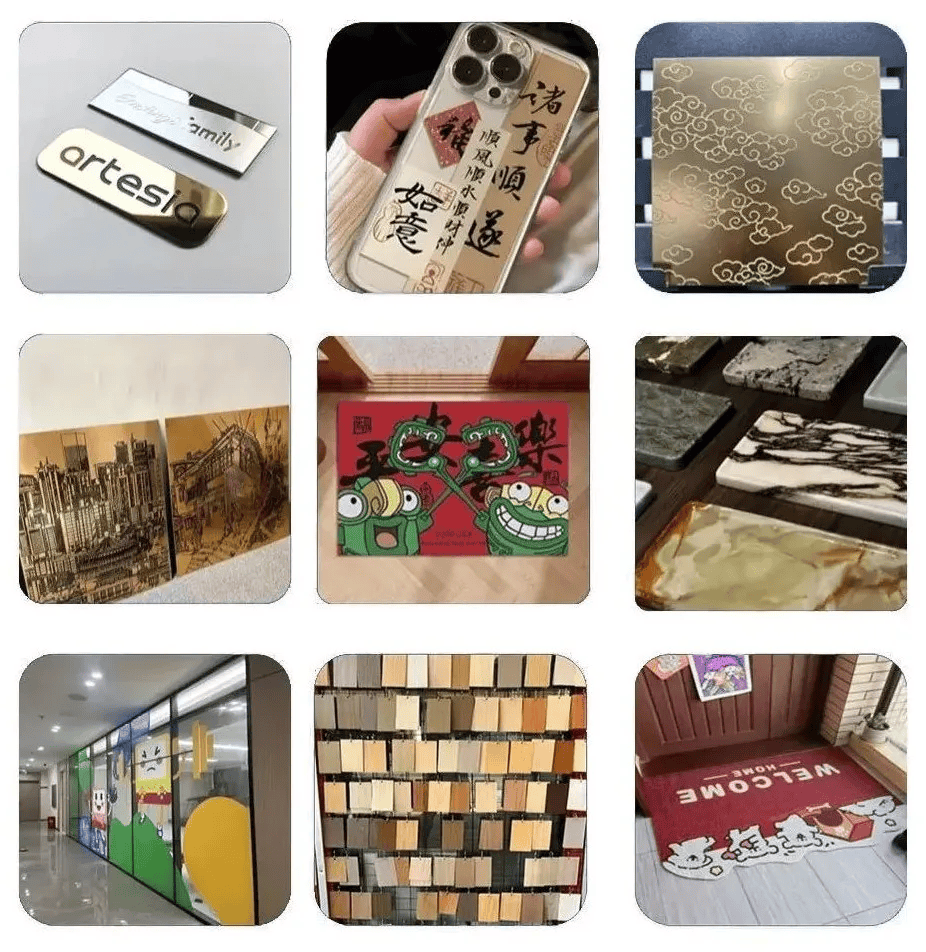
(1). Applicable Scenarios: Recommended applications in different industries
Your business area and the products you primarily print are the primary factors to consider when choosing a UV printer type.
In the building materials industry: If you focus on personalized customization of hard materials such as ceramic tile backsplashes, integrated wall panels, glass partitions, and wooden doors and cabinets, a flatbed UV printer is the first choice. It can directly print exquisite patterns and embossed effects on the surface of these materials.
Advertising and signage industry:
For advertising production using flexible materials such as lightbox fabric, stretch ceiling, vehicle wrap, and knife-coated fabric, roll-to-roll UV printers can excel, achieving efficient and high-quality output.
For rigid advertising materials such as acrylic signs, PVC signs, and metal display panels, a flatbed UV printer is required.
Advertising companies with a wide range of business operations may consider using a roll-to-roll machine.
Mass customization: If your business involves appliance panels, electronic product casings, high-volume packaging printing, etc., with extremely high requirements for capacity and efficiency, then an industrial-grade UV printer (flatbed or roll-to-roll type depending on the material) will be key to enhancing competitiveness. Its high-speed and stable characteristics are suitable for continuous operation.
The cultural and creative gifts and personalized customization market: Personalized printing of small items such as mobile phone cases, USB flash drives, keychains, acrylic ornaments, and small handicrafts. Small desktop UV printers, with their flexibility and low entry barrier, have become an ideal choice for entrepreneurs and small studios.
(2). Cost-effectiveness analysis: How to obtain the best equipment within the budget
"Buy what's right, not what's expensive" is an eternal truth. Cost-effectiveness isn't simply about pursuing the lowest price, but about optimizing input and output while meeting core needs.
Define your core needs and budget limits: First, clearly define your primary printing materials, expected output, quality requirements, and acceptable budget range. This will help you filter out many unsuitable printer models.
Focus on the quality of core components:
● Printheads: Printheads from different brands (such as Ricoh, Epson, Kyocera, Konica, etc.) vary significantly in precision, speed, lifespan, and price. For example, Ricoh G5 and G6 printheads are commonly used in industrial equipment, known for their stability and precision; Epson printheads are widely used in small-format equipment, offering delicate color reproduction. Choosing the right printhead based on your quality and speed requirements is crucial.
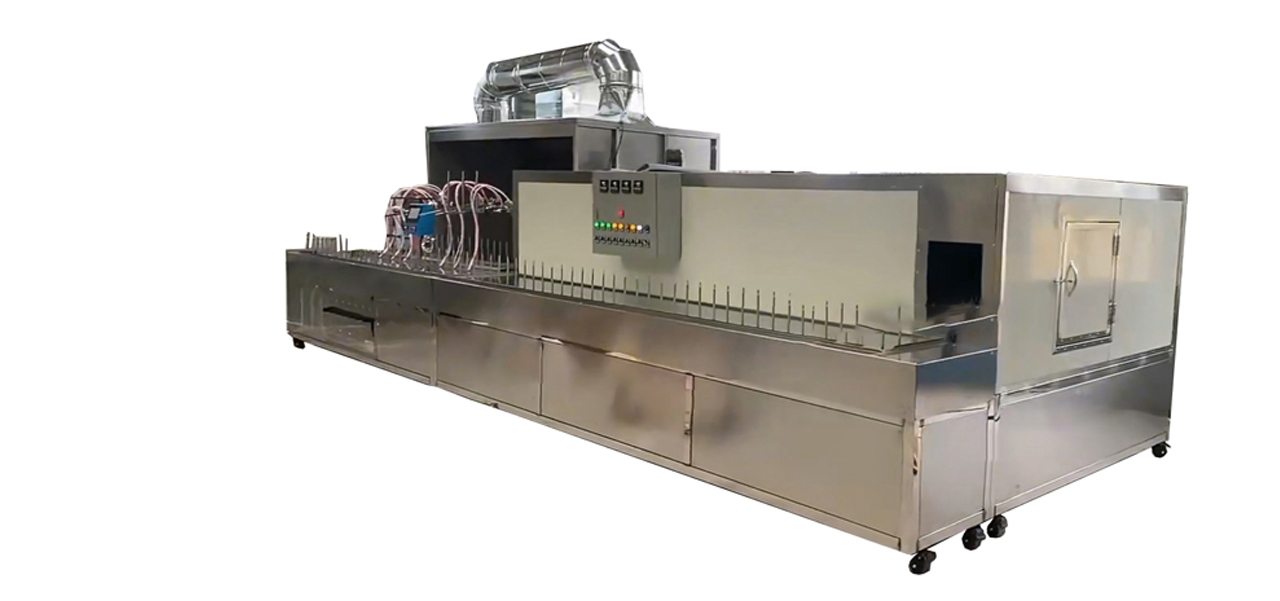
Curing System: LED UV lamps have become mainstream due to their long lifespan, low energy consumption, low heat radiation, and friendliness to heat-sensitive materials. Examine the brand, power, and cooling method of the LED chips.
●Mechanical structure and transmission system: A stable machine body, high-precision guide rails and lead screws, and reliable servo motors are the foundation for ensuring printing quality and equipment lifespan.
Examine the software and color management: The performance of the RIP (Raster Image Processor) software directly affects the accuracy of output colors and printing efficiency. Determine if the equipment is equipped with a professional color management system.
Consider the long-term costs: the cost of consumables such as UV ink and cleaning solution, as well as the replacement cycle and cost of vulnerable parts such as printheads, should all be taken into account.
Comparing after-sales service and technical support: the manufacturer's installation and commissioning, operation training, warranty policy, and fault response speed are important guarantees for whether the equipment can be put into production smoothly and operate stably for a long time.
Do not blindly pursue multiple functions: For startups or specific businesses, choose equipment that meets current core needs and has stable performance. There is no need to pay extra costs for advanced functions that are not currently needed.
A practical suggestion is that, after determining a general direction, compare different brands and models, and request the manufacturer to provide sample printing services using actual materials to visually experience the printing effect. At the same time, understanding the feedback from existing users can help you make a more comprehensive judgment.
5. Tips and Tricks: A Guide to Avoiding Pitfalls When Buying a UV Printer
In a complex market, be wary of certain "traps." Here are a few suggestions to help you see things more clearly.
Beware of the lure of extremely low prices: Equipment priced far below the market average may have issues with the nozzles, circuit boards, structural materials, or lack of after-sales service.
Verify printhead information: Daily checks should confirm the printhead brand, model, and whether it is original and brand new. Refurbished printheads or low-end replacements will seriously affect print quality and lifespan.
Focus on actual printing speed rather than theoretical peak speed: The maximum speed advertised by manufacturers is often only achievable in specific modes. You should focus on the actual printing speed in the production mode that meets your quality requirements.
On-site inspection and sampling: If conditions permit, be sure to visit the manufacturer or agent to inspect the equipment on-site and conduct sampling tests using your own materials.
Understand the contract terms carefully: clarify key information such as equipment configuration, payment method, delivery time, installation training, warranty scope and duration.
In a market rife with counterfeit and substandard products, Shuyintong UV printers, with stability, high speed, and high precision as their core guarantees, provide customers with high-quality factory equipment, making them a dark horse product in the industry.
Choosing a UV printer is a significant investment. It not only involves initial capital but also directly impacts your subsequent production efficiency, product quality, and business expansion. This guide aims to provide valuable insights and help you take a solid and wise step on your path to success with UV printing.