
In recent years, driven by increasing environmental awareness and increasingly stringent industrial emission regulations, the printing industry has undergone significant changes. As businesses seek more sustainable printing solutions, the debate between UV inks and traditional solvent-based inks has become more important than ever. Whether you are a printing plant owner, packaging manufacturer, or sign maker, understanding the fundamental differences between these two ink technologies is crucial to making informed decisions that benefit both your business and the environment. This comprehensive comparative report will explore the differences between these two inks in terms of environmental benefits, VOC reduction capabilities, and performance, helping you choose the right ink for your needs.
1.Understanding the fundamental differences
Before delving into comparisons, it's crucial to understand how each ink technology works. Traditional solvent-based inks rely on the evaporation of volatile organic compounds (VOCs) during the drying process, allowing the pigments to adhere to the substrate surface. Depending on environmental conditions such as temperature and humidity, this evaporation process can take anywhere from minutes to hours. The solvent carrier evaporates into the atmosphere, releasing significant amounts of VOCs into the air we breathe.
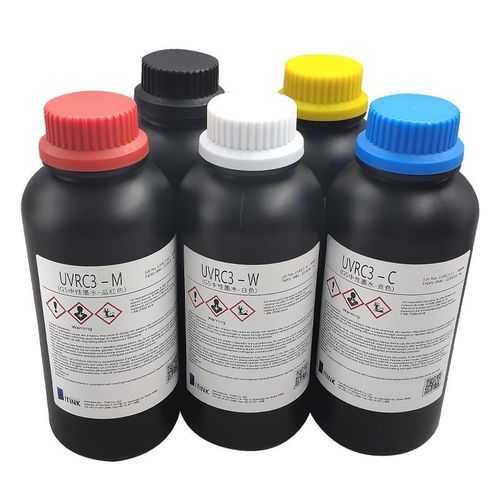
In contrast, UV inks represent a revolutionary printing method that eliminates the need for solvent evaporation. Instead of relying on evaporation, UV inks cure through a photochemical reaction under ultraviolet light. The ultraviolet light triggers photoinitiators in the ink, causing monomers and polymers to crosslink and harden almost instantaneously. This fundamental difference in curing mechanism is the basis for the numerous advantages of UV inks over solvent-based inks.
Technological advancements in the printing industry have led to UV inks and solvent-based inks becoming the two mainstream technologies in today's market. Due to their different technical approaches, they exhibit significant differences in environmental friendliness, printing performance, and cost control. For printing professionals, understanding these differences is no longer optional but essential for remaining competitive in an increasingly regulated industry.
2.Volatile Organic Compound Emission Reduction and Its Environmental Benefits
The problem of volatile organic compounds (VOCs) in solvent-based inks
One of the most worrying environmental problems in the printing industry is the emission of volatile organic compounds (VOCs) from solvent-based inks. These VOCs react with nitrogen oxides under sunlight to produce ground-level ozone, a major component of smog and exacerbating air pollution linked to respiratory diseases and climate change. Studies show that solvent-based inks release 30% to 50% of their volume in VOCs during the drying process, creating a significant and undeniable environmental burden.
The health effects of volatile organic compound (VOC) exposure are well-established. Printing plant workers using solvent-based inks face an increased risk of respiratory illnesses, headaches, and long-term health problems. Furthermore, the environmental impact extends beyond the workplace, exacerbating air quality issues throughout the community. Consequently, regulatory bodies worldwide have imposed stringent limits on VOC emissions from industrial operations, including printing plants.
UV inks: Low-VOC alternatives
One of the most well-known environmental advantages of UV inks is their extremely low emission of volatile organic compounds (VOCs). UV ink formulations contain little to no volatile solvents, meaning their curing process relies on photoinitiators and monomers or polymers that do not evaporate but instead polymerize under UV light. This fundamental difference results in virtually zero VOC emissions during the printing process, making UV inks a cleaner choice for both workers and the environment.
After curing, almost all volatile components polymerize, reducing residual emissions and unpleasant odors. Compared to traditional solvent-based inks, UV-cured products have a significantly milder odor, a key factor driving market growth as it helps create a safer working environment and meets the growing demand for environmentally friendly printing solutions. This characteristic is particularly important for indoor printing jobs, where air quality requirements are very high.
Regulatory compliance has become easier
Switching to UV inks can reduce VOC emissions and comply with stringent global environmental regulations, such as the US Environmental Protection Agency's Clean Air Act, the EU's REACH Regulation and VOC Directive, and China's Environmental Protection Law. For example, in the EU, printing plants using UV inks can typically avoid the high emission permit fees required for solvent-based inks. Therefore, UV inks not only meet regulatory requirements but also reduce management costs.
China's "Limits for Volatile Organic Compounds (VOCs) in Inks" (GB 38507-2020) requires that VOC emissions from packaging inks be ≤5%, accelerating the phase-out of solvent-based inks. The EU's "Industrial Emissions Directive" requires VOC emissions from the packaging and printing industries to be below 20 mg/m³, causing the market share of solvent-based inks to decline from 65% in 2015 to 42% in 2023. These regulatory trends clearly indicate the industry's development direction; therefore, switching to UV inks is not only an environmentally responsible choice but also a wise strategic decision.
3.Performance differences and application diversity
Printing speed and efficiency
One of the most compelling advantages UV inks is their instant curing capability. Unlike solvent-based inks that require long drying times, UV inks dry almost instantly under ultraviolet light. This not only eliminates lengthy drying times but also enables high-speed printing, significantly improving production efficiency. The instant drying characteristic of UV-cured inks allows them to achieve printing speeds unattainable by traditional solvent-based ink systems.
The efficiency advantages of UV printing go far beyond speed. Because the ink cures instantly, there are no stains or smudging during processing, allowing for immediate subsequent processing such as cutting, laminating, or mounting. This simplified workflow significantly reduces production time and labor costs, making UV printing an ideal choice for mass production.
Substrate compatibility and versatility
UV inks exhibit exceptional versatility in substrate compatibility. Because UV inks, aided by UV adhesion promoters, can adhere to a wide variety of materials, they are used across various industries for printing on diverse substrates, including paper, plastics, glass, and metals. This versatility opens up entirely new market opportunities that traditional solvent-based inks may not be able to access.
Traditional solvent-based inks require specific substrate properties to achieve good adhesion and typically must be used with compatible materials. UV inks, on the other hand, can adhere to a wider range of materials, including many that were previously difficult or impossible to print on. Furthermore, LED-UV technology can reduce energy consumption by 70% and supports printing on heat-sensitive materials such as PET films, further expanding its application scope.
4.Durability and weather resistance
In terms of durability and outdoor performance, UV inks have significant advantages over solvent-based inks. UV printing exhibits significantly better weather resistance than solvent-based printing. After curing, UV inks form a robust coating with excellent UV resistance, water resistance, and abrasion resistance, making them ideal for outdoor advertising and signage exposed to harsh environments for extended periods. Cured UV inks resist moisture and temperature changes, minimizing problems such as fading or decreased adhesion.
While solvent-based inks offer good durability in many applications, they typically require additional protective measures such as coating to achieve similar weather resistance. This increases both cost and complexity of the production process. UV inks, with their inherent durability, usually eliminate these extra steps while still delivering excellent results, making them a more efficient choice for outdoor applications.
5.Energy consumption and operational efficiency
Reduce energy demand
The environmental benefits of UV printing go far beyond reducing VOC emissions. UV printing processes are typically more energy-efficient than traditional solvent-based curing systems. Solvent-based inks require fans and heaters that consume significant energy to accelerate evaporation, while UV curing systems use highly efficient UV lamps that can be started instantly, requiring no preheating time. This instant-on/off characteristic avoids the energy waste caused by continuous operation of the curing system.
LED-UV technology further improves the energy efficiency of UV printing. Compared to traditional mercury UV lamps, LED-UV systems offer significantly lower energy consumption while providing the same curing power. This advancement makes UV printing more attractive in terms of environmental and operating costs, especially for businesses looking to reduce carbon emissions and energy expenditures.
Reduce waste and improve workflow
Compared to traditional solvent-based printing processes, UV printing generates less waste. Because the ink cures completely instantly, there is virtually no overspray or waste during the printing process. Furthermore, since printing and post-processing can be completed immediately, there is no need to store printed materials during the drying process, reducing storage space requirements and the risk of damage during handling.
The streamlined workflow enabled by UV printing also reduces the overall environmental impact of printing operations. Fewer steps mean fewer errors and rework opportunities, thus reducing material waste. For companies committed to sustainability, these operational efficiency improvements bring additional environmental benefits beyond directly reducing emissions.
6.Market Trends and Future Outlook
Adoption rates and market growth are increasing.
The widespread adoption of UV printing technology is reflected in robust market growth figures. The UV ink market is growing at an annual rate exceeding 8%, and its size is projected to surpass 1.2 billion RMB by 2025. This growth trend indicates that more and more printing professionals are recognizing the advantages of UV technology and are shifting towards it.
Industry leaders should not view UV-curable inks as alternatives to solvent-based and water-based inks, but rather as a core driver for achieving digital, energy-efficient, and environmentally friendly printing workflows. Collaboration among printer manufacturers, raw material suppliers, and packaging processors can accelerate innovation and market penetration. Companies that are the first to adopt and meet the market's growing demand for low-VOC, fast-curing, and highly durable formulations will gain a lasting competitive advantage.
Innovation and emerging technologies
The UV ink industry continues to innovate, with new formulations and technologies constantly emerging. Water-based UV inks combine the environmental friendliness of water-based inks with the high-efficiency curing performance of UV inks, solving the problem of slow drying speeds inherent in traditional water-based inks. These hybrid solutions represent the ongoing development of printing technology and foreshadow the continued improvement and larger market share of UV printing systems.
The development of novel photoinitiators, monomers, and oligomers has enabled UV inks to maintain their environmental advantages while achieving superior performance. As research continues and new products enter the market, the gap between UV inks and traditional solvent-based inks will only widen, with more sustainable technologies taking center stage.
7.Make the right choice for your business
Precautions for different applications
While UV inks offer numerous advantages, the choice between UV inks and solvent-based inks depends on the specific application requirements. For indoor applications where VOC emissions are a primary concern, UV inks are clearly the better choice. For outdoor applications requiring the highest durability, UV inks also demonstrate significant advantages. However, certain specialized applications may still benefit from the specific properties of solvent-based inks, making it crucial to evaluate each application case individually.
Environmentally friendly solvent-based inks offer numerous benefits for indoor printing, releasing significantly less volatile organic compounds and other harmful pollutants compared to traditional solvent-based inks. For companies that cannot yet fully adopt UV printing technology, environmentally friendly solvent-based inks represent an important step in improving their environmental performance.
Total Cost of Ownership Analysis
When evaluating ink solutions, companies should consider the total cost of ownership, not just the price of the ink. While the unit cost of UV inks may be higher, UV technology often offers a greater overall cost-effectiveness advantage due to factors such as energy savings, reduced waste, faster production speeds, and lower compliance costs. Furthermore, the market is moving towards stricter environmental regulations, meaning solvent-based ink users will face increasing compliance costs in the future. Therefore, adopting UV technology early is undoubtedly a wise financial decision.
The initial investment in UV printing equipment may be higher than that of traditional solvent-based printing systems, but its long-term operating cost savings and competitive advantages usually outweigh this investment. As the industry continues to develop and environmental regulations become increasingly stringent, the economic benefits of UV printing will only become more and more significant.
Conclusion
A comparison of UV inks with traditional solvent-based inks shows that UV inks are clearly superior for companies that prioritize environmental responsibility and operational efficiency. UV inks significantly reduce VOC emissions, achieve instant curing, accelerate production, and offer superior durability and broader substrate compatibility. This technology complies with global environmental regulations, making it not only a sustainable option but also a future-oriented solution.
Market statistics clearly show that the printing industry's transition to UV technology is on track. With an annual growth rate exceeding 8% and increasing regulatory pressure, the advantages of UV printing will only become more pronounced. For printing companies seeking to remain competitive while also prioritizing environmental protection, the choice is becoming increasingly clear: UV ink technology represents the future path to sustainable development and profitability for the printing industry.
Switching to UV printing is not merely a technological upgrade, but a commitment to environmental protection, workplace safety, and operational excellence. As the technology continues to develop and improve, UV inks will undoubtedly play an increasingly important role in the future of the printing industry.