
Introduction
The printhead is the core precision component of a UV printer, directly determining printing accuracy, image quality and equipment service life. Most UV printing practitioners encounter three common problems: Why are UV printheads so expensive? Why do nozzle line breaks occur after long-term printing? Why is there still no ink output after repeated cleaning?
All these problems stem from a lack of understanding of printhead working principles. This article comprehensively explains the basic structure, core inkjet technology, precision control, common faults and cost logic of UV printheads, helping users troubleshoot faults accurately and maintain printheads scientifically.
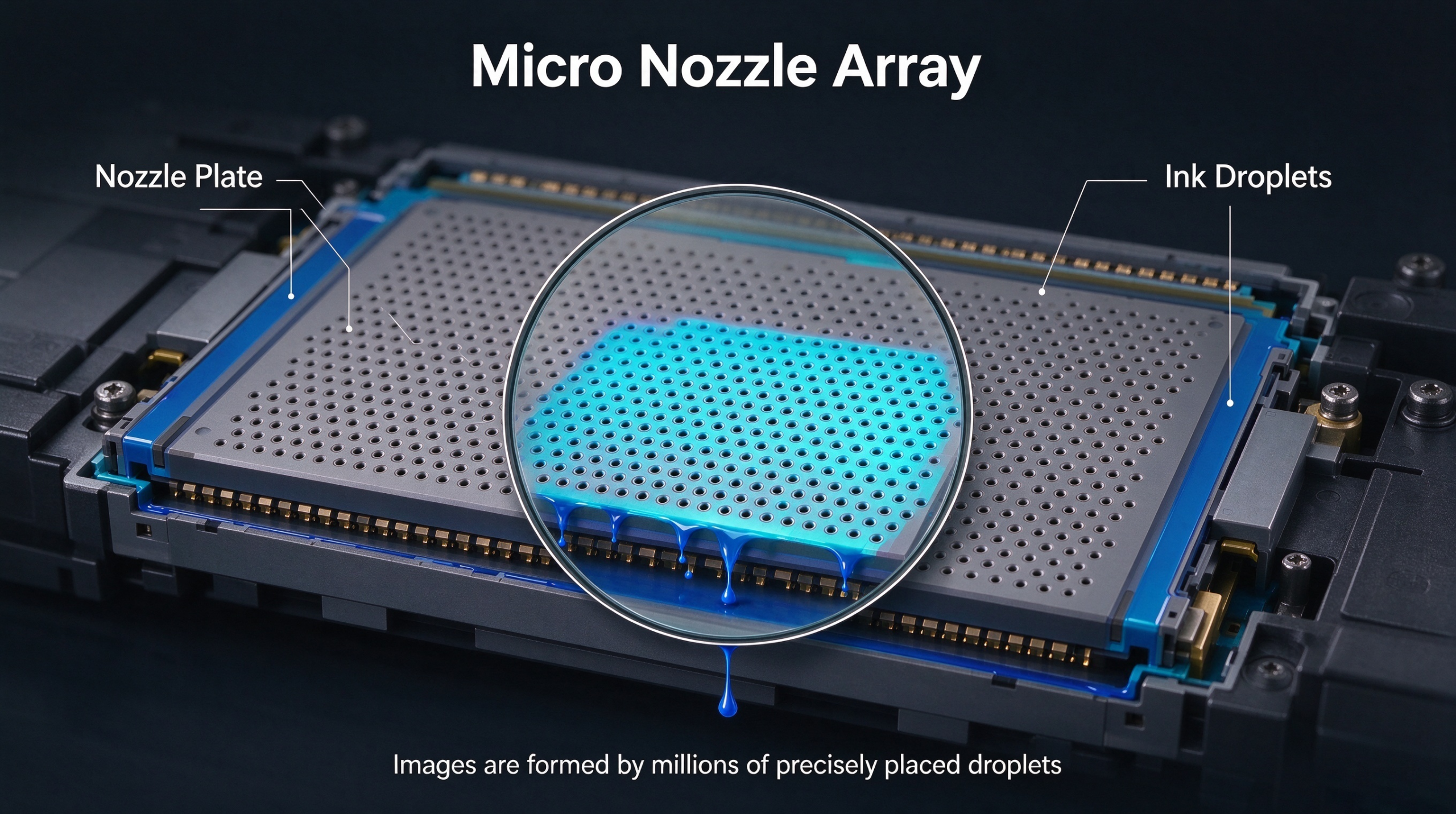
- Basic Structure: Micro Nozzle Array
A UV printhead is palm-sized in appearance but equipped with hundreds of micron-level micro nozzles inside, which are the core working units for printing. During operation, the ink supply system delivers UV ink to the printhead ink cavity. According to image data, the control system accurately controls each nozzle to spray tiny ink droplets at specified positions and times.
Countless ink droplets fall and stack on printing materials such as acrylic, metal, glass and leather, forming high-definition patterns and texts. Simply put, printing images are orderly arrangements of massive precise ink droplets.
- Core Technology: Piezo Inkjet Working Principle
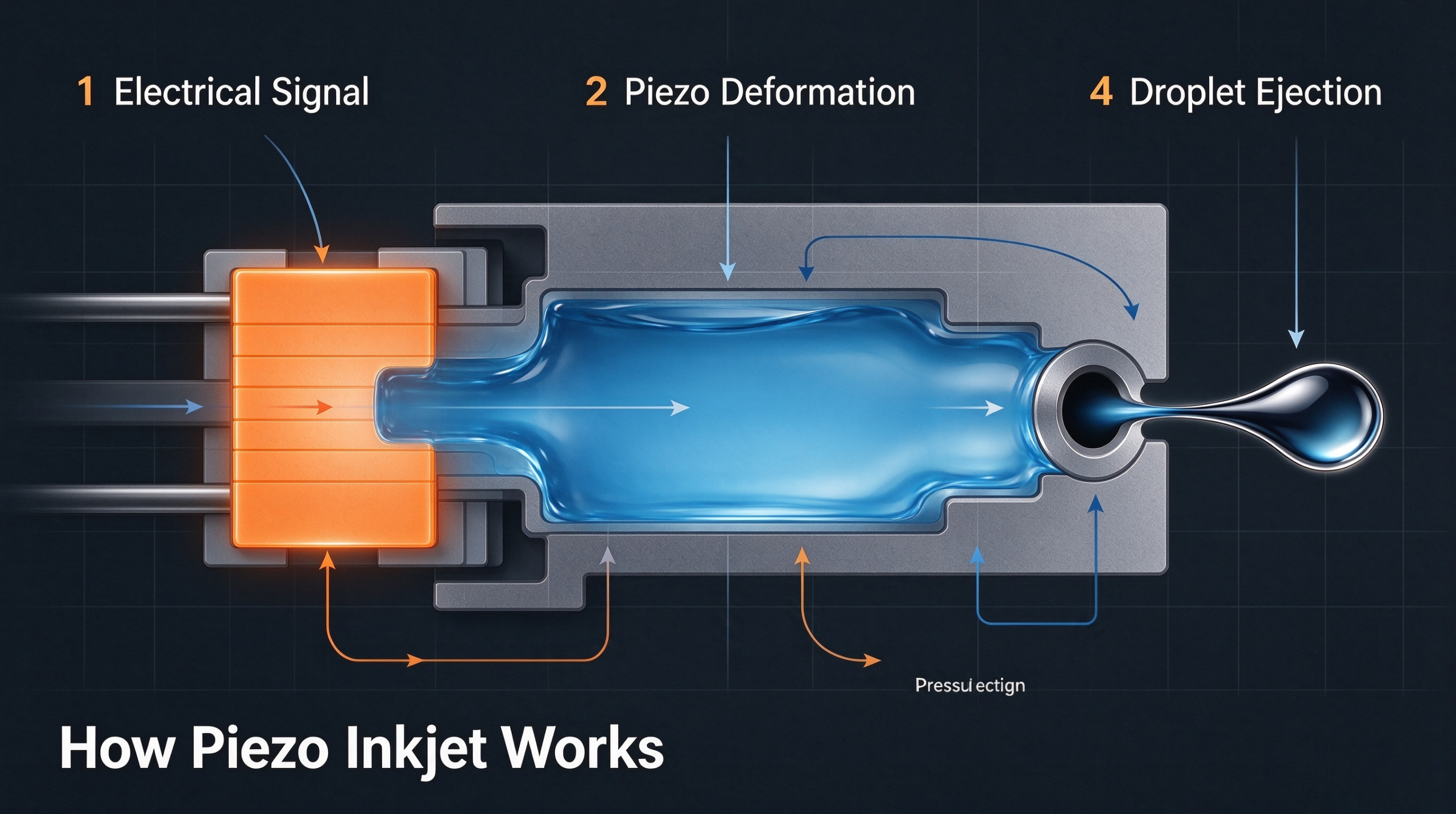
Most industrial UV printers adopt piezo inkjet technology, the mainstream and high-end solution for industrial printing equipment. Different from traditional mechanical extrusion inkjet, piezo printheads rely on the physical deformation of piezoelectric materials.
Complete working process: The control system sends electric signals to piezoelectric materials. The materials produce tiny instantaneous deformation to squeeze the ink cavity, causing pressure changes inside the cavity. Then micro ink droplets are ejected from nozzles at high speed. After the electric signal disappears, the material resets and waits for the next instruction.
This high-frequency action supports thousands of inkjet cycles per second. Each nozzle works independently, enabling the printhead to print complex color gradients and delicate patterns with zero mechanical wear, ensuring long-term stable industrial production.
- High-Definition Printing: Micron-Level Precision Control
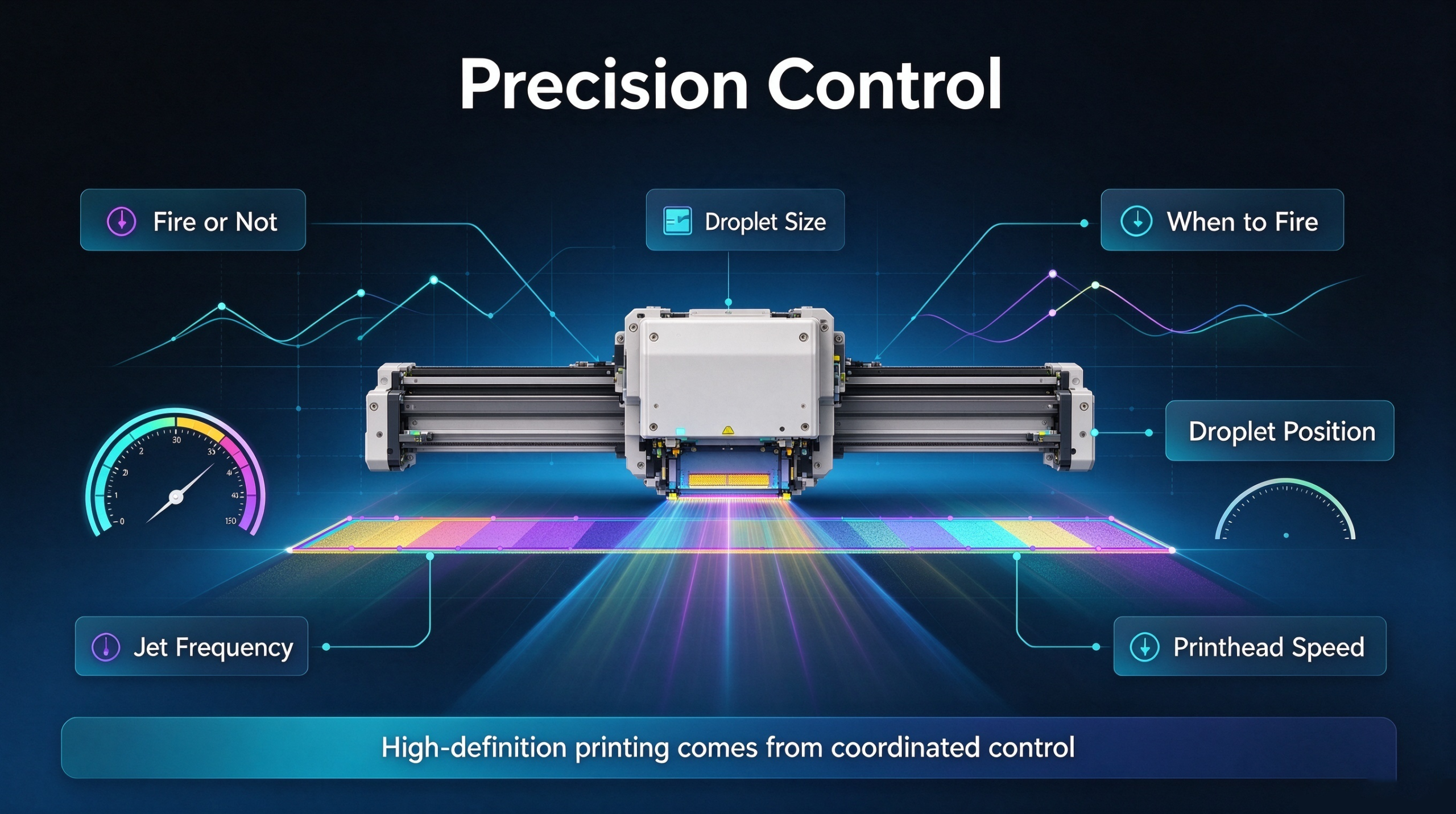
The difference in printing quality mainly lies in the precise intelligent control system of printheads. A high-quality UV printhead accurately controls six core parameters in real time: inkjet switch, ink ejection timing, ink droplet size, droplet landing position, jet frequency and printhead moving speed.
By adjusting these parameters adaptively according to different printing modes (high-speed, high-definition, base coating), the printhead balances printing speed, accuracy and color saturation perfectly, presenting exquisite and uniform printing effects.
- Common Faults: Line Breakage & No Ink Output Reasons
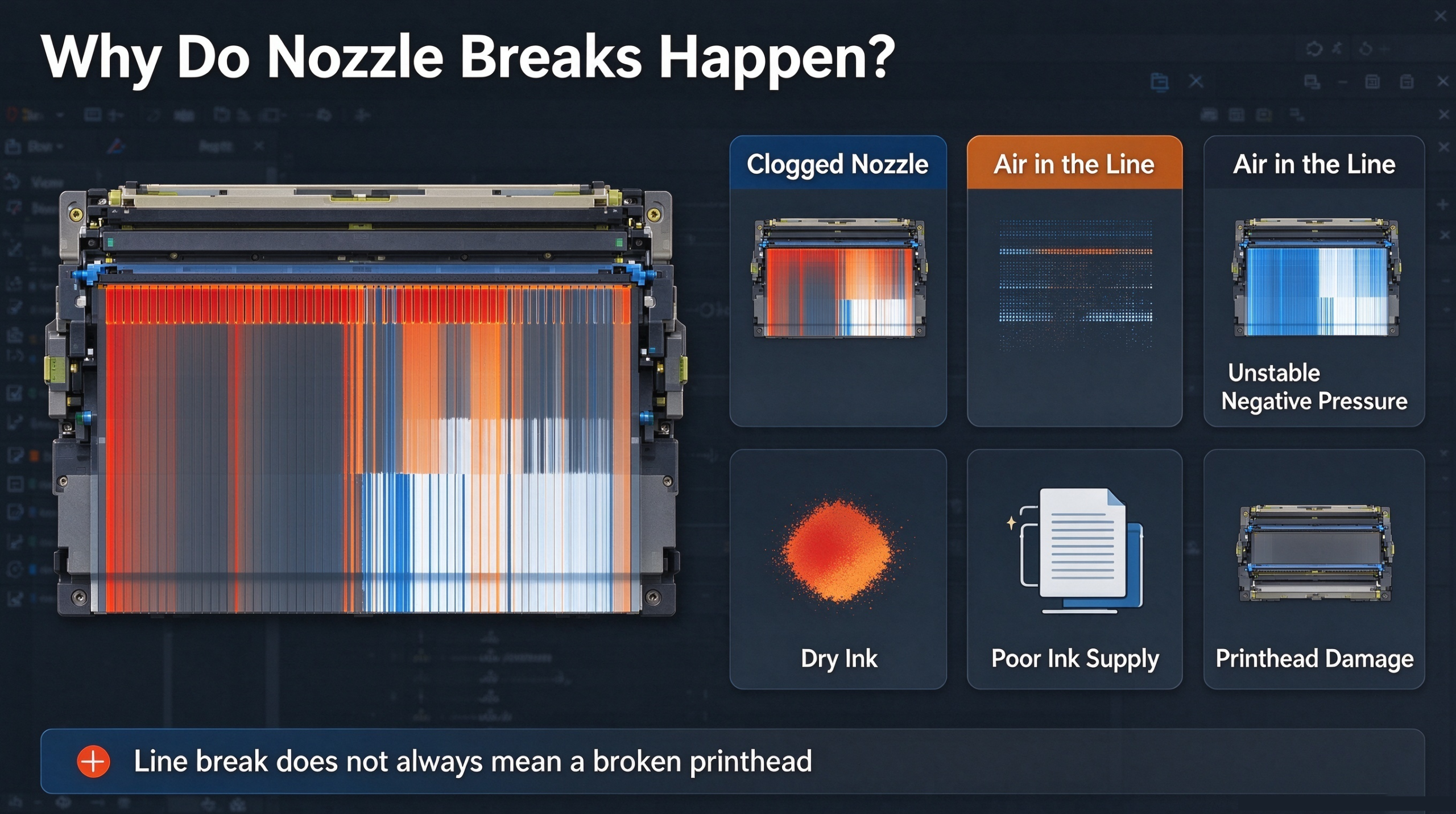
Printhead line breakage and no ink output are the most frequent faults in UV printing. Most faults are not caused by printhead damage, but by the following 6 reasons:
- Nozzle blockage: UV ink cures fast, and residual ink impurities block micron nozzles without daily maintenance;
- Air entry in ink pipeline: Air enters the ink cavity due to loose pipes or insufficient ink liquid level, blocking ink supply;
- Unstable negative pressure: Abnormal negative pressure system leads to unbalanced ink cavity pressure and failed ink supply;
- Dry ink at nozzle mouth: Long-term shutdown or high ambient temperature causes ink drying and nozzle blockage;
- Abnormal ink supply: Blocked filter or faulty ink pump interrupts ink delivery;
- Physical damage: Collision, scratch or unstable voltage damages internal piezoelectric crystals (rare).
- Why Are UV Printheads So Expensive?
The high price of UV printheads is determined by high-end manufacturing technology and technical barriers, not brand premium:
First, ultra-precision processing: Micron-level nozzles require nanometer-level tolerance control, with extremely high manufacturing thresholds;
Second, core technology monopoly: Piezoelectric material formula, electric drive algorithm and pressure balance system are core patented technologies;
Third, strict durability requirements: Printheads need to resist corrosive UV ink and support long-term high-frequency continuous work;
Fourth, integrated non-detachable structure: Internal components are highly integrated and cannot be repaired partially, requiring overall replacement once damaged.
- FAQ for Google SEO
Q1: Does printhead line breakage mean the printhead is broken?
A: No. Most line breakage problems are caused by nozzle blockage, pipeline air entry or unstable negative pressure, which can be fixed by cleaning and system debugging.
Q2: Why no ink after repeated printhead cleaning?
A: It is usually internal pipeline blockage, air entry or abnormal negative pressure, not surface nozzle dirt. Simple surface cleaning cannot solve internal system problems.
Q3: What is the service life of a UV printhead?
A: With standard operation and daily maintenance, industrial piezo printheads can last 1-3 years. Improper maintenance will lead to frequent faults and scrapping in several months.
Q4: What is the core gap between different brand UV printheads?
A: The gap lies in nozzle processing accuracy, piezoelectric response speed and pressure system stability, affecting printing precision, color restoration and fault rate directly.
Conclusion
A UV printhead is essentially a micron-level piezo intelligent inkjet system. Piezoelectric deformation inkjet is the core principle, and precise algorithm control guarantees high-definition printing. Most common faults result from poor maintenance and abnormal ink systems rather than printhead damage. Mastering printhead working principles and adhering to daily maintenance can effectively reduce costs and improve printing efficiency and quality.